SIPAZ Activities (From mid-November 2025 to mid-February 2026)
12/03/2026
FOCUS: “Chiapas, Pending Peace”
16/06/2026
I n recent months, the relationship between Mexico and the United States has been marked by cooperation on security and border control, but also by sustained trade tensions and strong concerns regarding human rights.
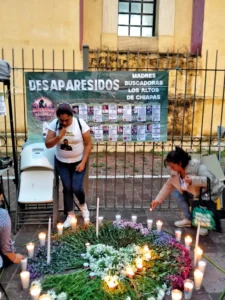
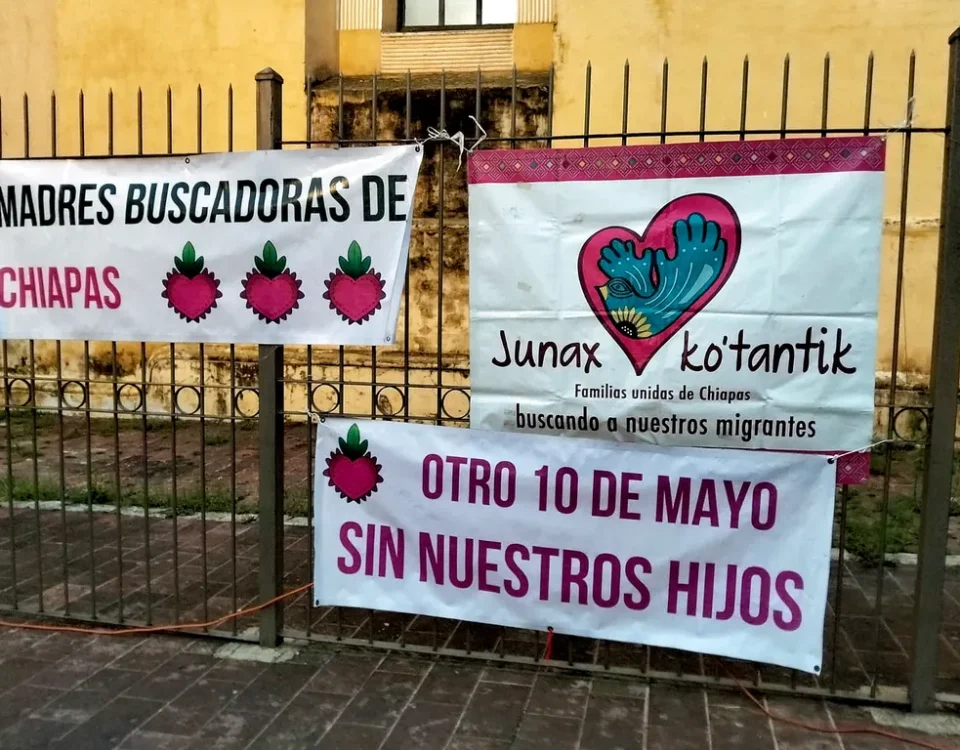
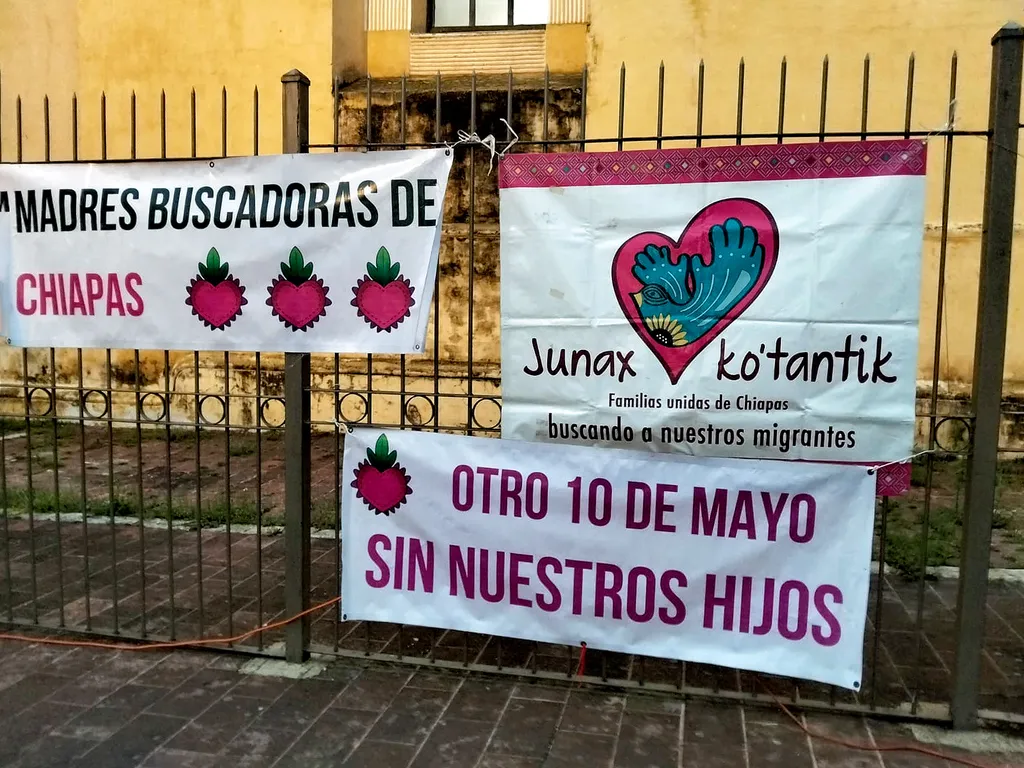
Activities of mothers searching for their missing children in the context of Mother’s Day, San Cristóbal de las Casas, May 2026 © SIPAZ
A central focus of the bilateral relationship remains security and the fight against drug trafficking. Both countries have intensified joint operations against criminal organizations. In April, the United States accused Governor Rubén Rocha Moya and Sinaloa officials of collaborating with the Sinaloa Cartel and requested their extradition. The accusation alleges pacts with “Los Chapitos” to facilitate drug trafficking in exchange for bribes and institutional control. Rocha denied the allegations and requested a temporary leave of absence, while the Mexican Attorney General’s Office stated that there is still insufficient evidence to proceed with legal action. In May, Mexican authorities captured the nephew of Joaquín “El Chapo” Guzmán, who faces extradition proceedings to the United States on organized crime charges.
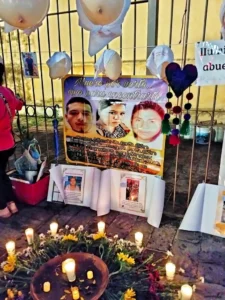
Activities of mothers searching for their missing children in the context of Mother’s Day, San Cristóbal de las Casas, May 2026 © SIPAZ
Since the beginning of 2026, tariff threats have persisted, driven by US President Donald Trump, who links the economic measures to the fight against fentanyl and irregular migration. Mexico has sought to avoid new US tariffs on steel, aluminum, and the automotive sector, underlining the high level of economic integration between the two countries. At the same time, the Mexican government has promoted trade diversification strategies, strengthening relations with the European Union to reduce economic dependence on the United States.
Another key bilateral issue is migration. Both governments have reinforced border and security coordination through high-level meetings between US officials and Mexican President Claudia Sheinbaum. In May, it was reported that irregular migrant crossings on the US southern border decreased by 90% between October 2024 and May 2026, a figure considered the lowest in decades. Mexican authorities indicated that cooperation on this matter was based on principles of “coordination without subordination.” Meanwhile, human rights organizations denounced the tightening of US immigration policies. Various reports documented abuses against migrants detained in Immigration and Customs Enforcement (ICE) facilities, including overcrowding, lack of medical care, and family separation. Among the most serious cases were reported violations of the rights of pregnant women and people in vulnerable situations. Since the beginning of Donald Trump’s second term in January 2015, at least 46 deaths in ICE custody have been reported, 14 of whom were Mexican nationals. This situation has generated concern and criticism among migrant organizations and communities. The Mexican government has demanded justice and transparency from the United States, without results to date.
The migration context on Mexico’s southern border also reflects serious problems. Organizations such as the Southern Border Monitoring Collective have denounced corruption in the regularization processes in Mexico, where procedures that should be free can cost up to 40,000 pesos. This situation, coupled with the increasing militarization of the southern border and the arrival of migrants deported from the United States, has created conditions of extreme vulnerability. Migrants face inequality, risks to their physical and emotional health, family separation, and a lack of consular support.
Mexico: Human Rights Crisis – Just the Tip of the Iceberg?
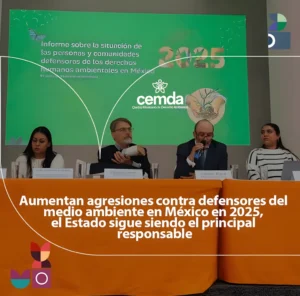
New report on environmental and land defenders, April 2026 © CEMDA
Between February and May 2026, Mexico continued to face high levels of violence, disappearances, and challenges to the institutions responsible for guaranteeing justice and human rights.
In April, Amnesty International published a critical assessment of Claudia Sheinbaum’s first year in office. The report warned that problems such as violence, impunity, disappearances, and militarization persist, and cautioned about the risk that some government policies could exacerbate them. It also pointed to risks to judicial independence, civic space, and the protection of human rights. Meanwhile, the “Mexico Peace Index 2026” reported a decrease in homicides but warned of an increase in disappearances, extortion, and domestic violence.
The crisis of enforced disappearances remained the main human rights issue. Although the government presented new search strategies, collectives and families denounced impunity, a lack of results, and exclusion from decision-making. They also criticized the official figures and the classification of many cases as voluntary disappearances.
The publication of a report by the UN Committee against Enforced Disappearances generated tensions with Mexican authorities. While some organizations acknowledged its relevance, the National Human Rights Commission (CNDH) rejected its conclusions. During his visit to Mexico, the UN High Commissioner for Human Rights, Volker Türk, recognized political will; however, he considered the actions taken insufficient in the face of a crisis involving more than 130,000 missing persons.
The mobilizations of mothers searching for their missing loved ones in May once again highlighted social discontent. The families denounced the fact that they continue their search efforts due to the lack of official answers and demanded truth, justice, and greater protection for those searching for their relatives.

Visit of the United Nations High Commissioner to Mexico © PRODH Center
In a report published that same month, the Inter-American Commission on Human Rights (IACHR) described the disappearances in Mexico as a “serious human rights crisis” and warned of possible links between criminal groups and authorities.
Closely linked to the disappearances crisis, organized crime violence remained a central issue. In February, Nemesio Oseguera Cervantes, “El Mencho,” leader of the Jalisco New Generation Cartel (CJNG), was killed during a federal operation in Jalisco. The events triggered roadblocks, fires, and armed attacks in several states, leaving dozens dead among security forces and suspected members of organized crime.
Vulnerability of Defenders and Journalists: Another Point of Concern
Another issue of concern remains the vulnerable situation of journalists and human rights defenders. In February, dozens of activists demonstrated in Mexico City to demand an end to the violence in the country, where at least 40 human rights defenders were murdered in 2025 alone.

Presentation of the report “Structures of silence: censorship, opacity and surveillance” © Article 19
In March, debate arose following the decision by the Tax Administration Service (SAT) to revoke permits for more than 270 civil society organizations to receive tax-deductible donations. President Claudia Sheinbaum stated that this is a “technical” and not a political measure, rejecting criticism that it is an attempt to weaken organizations critical of the government. For their part, organizations such as Amnesty International considered that this action jeopardizes the operation of civil society and weakens democracy by affecting its capacity for funding and action.
In April, the Mexican Center for Environmental Law (CEMDA) reported that Mexico registered 135 attacks and ten murders of environmental and land defenders in 2025. Furthermore, the organization warned that the State itself remains primarily responsible for attacks against those who protect the natural environment.
As regards journalists, in May, Article 19, a freedom of expression organization, presented its annual report, “Structures of Silence: Censorship, Opacity, and Surveillance.” In Mexico, considered the deadliest country for the press in the region, one journalist disappeared and seven were murdered in 2025. The organization also documented 451 attacks against the press in the country: one every 20 hours. The report questioned new laws promoted by the government of Claudia Sheinbaum, such as the “National Guard Law,” which would allow the military to access personal data without sufficient controls, reinforcing militarization and the use of technology as a surveillance mechanism.
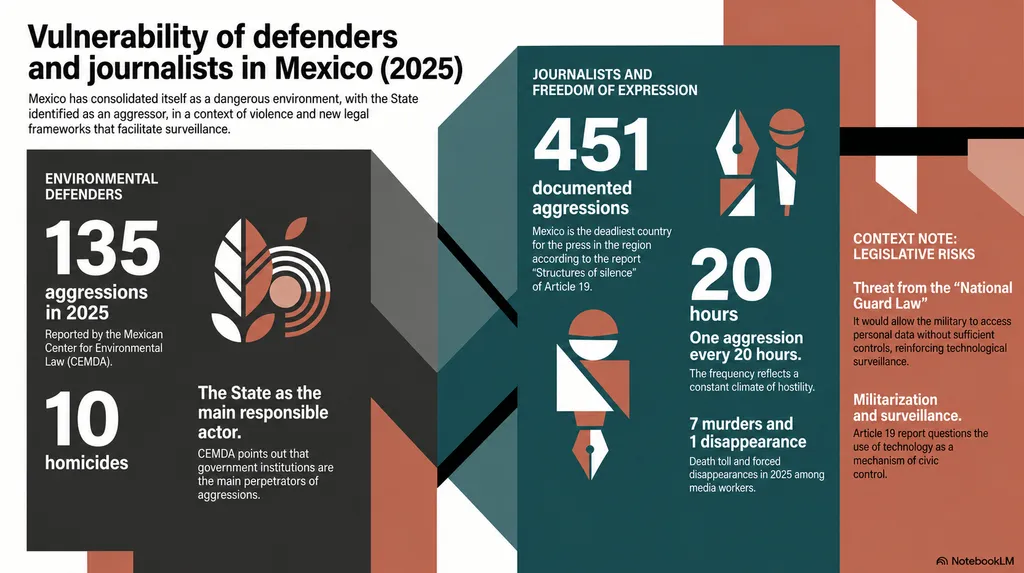
Infographic created with AI assistance – NotebookLM © SIPAZ
Land, Territory, and Natural Resources: Other Demands from Civil Society Organizations

Maya Train Station, May 2026 © SIPAZ
In February, a federal court ordered the suspension of construction on Section 5 of the Maya Train, determining the existence of environmental damage and non-compliance with mandatory environmental impact assessments. The court ruled that construction must remain halted until the environmental reviews required by law are properly carried out and completed.
It is worth recalling that the Maya Train, a flagship project of former President Andres Manuel Lopez Obrador, was announced in 2018. Since then, organizations and communities have documented significant socio-environmental risks and impacts, including the deforestation of more than 11,000 hectares, the fragmentation of ecosystems, the drilling and destruction of cenotes and caverns, the alteration of wetlands, aquifer contamination, and the loss of habitat for emblematic fauna. They point out that, to date, no effective mitigation measures have been implemented. They have also documented an increase in criminal and institutional violence in areas that previously had low crime rates, despite the increased military presence on the Peninsula.
In February, following statements by Claudia Sheinbaum, the debate on fracking intensified. What was completely rejected during the election campaign now appears as a real option for obtaining unconventional gas and strengthening the country’s energy independence, as it imports almost three-quarters of its natural gas from the United States. The “Mexican Alliance Against Fracking” described the shift as a betrayal of campaign promises and warned that there is no scientifically proven way to conduct fracking in an environmentally friendly manner.
In May, three years after the comprehensive reform of the mining legal framework, the collective “¡Cambiémosla Ya!” (Let’s Change It Now!) accused the Ministry of Economy and SEMARNAT (the Ministry of Environment and Natural Resources) of delaying the issuance of the regulations essential for the full implementation of mining legislation. Although the reform approved in 2023 meant progress in the protection of communities, workers and the environment, the absence of secondary regulations —which should have been published since October of that same year— has prevented the authorities from canceling concessions even in situations related to worker deaths, alleged links with organized crime, and irreversible environmental damage.
Forced Displacement: An Ongoing Problem in Large Parts of the Country
In May, the report “Forced Journeys: Internal Displacement in Mexico 2025” by the Ibero-American University was published, documenting that at least 15,795 people were forced to leave their places of origin that year in 73 separate incidents across 11 states. The research revealed that 83% of displacement cases were associated with organized crime. Sinaloa had the highest percentage of incidents, with 39.2%, followed by Chihuahua with 28.4% and Michoacan with 21.3%. However, the phenomenon is present in eleven states of the country, which is equivalent to a third of the national territory.
The report warns of the increased use of explosives, drones, and antipersonnel mines, which have heightened the danger to affected communities and worsened the living conditions of families, many of whom are forced to flee their homes suddenly due to direct threats or armed clashes. While acknowledging the inclusion of a question on forced displacement in the 2025 Intercensal Survey by INEGI (the National Institute of Statistics and Geography) as progress, the report concludes that the legal framework remains insufficient. It emphasizes the urgent need to create a comprehensive law on the matter and to establish a coordinated national registry to guarantee full reparations for victims.
Women: Regulatory Advances, Limited Effective Implementation
In February, the UN Special Rapporteur on Violence against Women and Girls, Reem Alsalem, told the Senate that Mexico must strengthen public policies, institutions, and budgets dedicated to protecting women and girls. She acknowledged legislative progress on equality but warned that laws are insufficient without resources, effective implementation mechanisms, and genuine follow-up.
In April, another regulatory advance occurred when the Senate approved an initiative promoted by President Claudia Sheinbaum to enact a “General Law on Femicide” that would standardize this crime throughout the country. The proposal seeks to unify criteria, sanctions, and investigation procedures, as well as strengthen coordination among authorities and guarantee access to justice and reparations for victims. It arises from current inconsistencies in the legal definition of femicide among the states, which has generated legal inequality and difficulties in the administration of justice. However, feminist organizations such as “Las Constituyentes MX” (The MX Constituents) questioned the lack of updated data on Mexico, the minimization of impunity, and the absence of an intersectional approach for Indigenous, migrant, or disabled women. They also criticized the exclusion of victims’ families, the insufficient attention to comprehensive reparations, and the lack of analysis of mechanisms such as “Gender Violence Alerts.”
CHIAPAS: Persistent Violence and Human Rights Violations
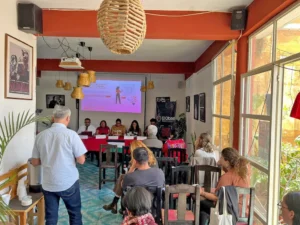
Presentation of the new report by El Obse, an observatory of attacks against human rights defenders and journalists, San Cristóbal de las Casas, March 2026 © SIPAZ
Chiapas continues to be one of the states facing the greatest challenges in terms of human rights. Human rights groups and centers have denounced the increase in disappearances, forced recruitment, internal displacement, and the presence of criminal groups. They also point to the expansion of militarization and the constant risk to human rights defenders and Indigenous communities.
Regarding organized crime, an alleged payroll attributed to the recently killed Nemesio Ruben Oseguera Cervantes, alias “El Mencho”—also known as “The Lord of the Roosters”—leader of the Jalisco New Generation Cartel (CJNG), was published by the newspaper “El Universal.” It outlines that his operations in Chiapas cost him almost 2,000,000 pesos per week, with more than 300 hitmen receiving salaries of between 2,000 and 10,000 pesos per week. What has generated the most controversy is that the list also includes the “Pakal Immediate Reaction Force” (FRIP), created in 2024 by the governor of Chiapas, Eduardo Ramírez Aguilar: a special state force with high-powered weaponry intended to combat the cartels vying for control in the state. Municipal police forces from several cities also appear on the list. Governor Eduardo Ramirez announced a thorough investigation to “punish with the full force of the law whoever is responsible.”
In March, in a case that calls into question the actions of the FRIP, the Fray Bartolome de Las Casas Human Rights Center (Frayba) presented the case of Oscar Trinidad Carbajal, detained in November 2025 and allegedly tortured by members of the “Pakal” group. Frayba stated that the case is part of a pattern of violations in Chiapas that includes arbitrary detentions, torture, and abuses during arrest, with possible responsibility on the part of the state attorney general’s office and security forces. Given the lack of progress in the investigations, the case was taken to international bodies. The family demands his release and the clarification of the facts, in addition to denouncing harassment.
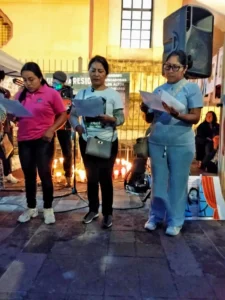
Activities of mothers searching for their missing children in the context of Mother’s Day, San Cristóbal de las Casas, May 2026 © SIPAZ
In April, an armed attack occurred in the municipality of Nicolas Ruiz. Two men were killed, several people were injured, and one remains missing. The organized community of Nicolas Ruiz denounced that the attackers were members of organized crime groups, stating that the authorities know who is responsible. Since 2025, several communities have formed an alliance and established community guards due to the lack of action by the State or its possible complicity in the violence. The community demands the safe return of the missing man, justice for the victims, a genuine investigation that punishes those responsible, and respect for their autonomy as an Indigenous community. In the same context, in the nearby municipality of Venustiano Carranza, a confrontation also took place between alleged drug traffickers and members of the “Emiliano Zapata Peasant Organization” (OCEZ), known as the “People’s House.”
The issue of disappearances is taking center stage. In April, skeletal remains were located near San Fernando and Berriozabal. The discovery was made possible by an anonymous tip and was carried out by the “Searching Mothers” collective of Chiapas, in coordination with authorities. Berriozabal is a particularly affected area, considered a hotspot due to the high number of disappearances, mainly of young people. “They feign peace, but the disappearances continue. It has been the same government and the same Attorney General’s Office that take them and make them disappear,” stated the “Searching Mothers” collective of Chiapas.
On Mother’s Day, activities were held in various cities, including Tuxtla Gutierrez and San Cristobal de Las Casas. Family members accused federal and state authorities of downplaying the disappearance crisis and fostering impunity. The groups maintained that they have documented the increase in disappearances in Chiapas for several administrations and attributed this situation to territorial disputes between criminal groups, as well as government tolerance and acquiescence.
In March, “El Obse,” an observatory of attacks against human rights defenders and journalists, presented its third report to highlight the violence and insecurity faced by those who carry out this work in the state. It pointed out limitations in the processes of investigating and prosecuting attacks. While the Chiapas government presents an overview of improved state security, highlighting progress in stabilization and a reduction in certain violence indicators, “El Obse” suggests that, although some visible expressions of violence have decreased, this does not imply their disappearance, but rather a transformation in their forms. Instead of open confrontations, dynamics of intimidation and territorial control are observed more frequently.
This same month, the Fray Matias de Cordova Human Rights Center in Tapachula reported two raids in less than 72 hours, which it considered acts of aggression and intimidation against its work, despite having federal protection measures in place. The center pointed to negligence on the part of the authorities, as no effective measures were activated after the first report, allowing the attack to be repeated. Various civil society organizations and the UN Special Rapporteur, Mary Lawlor, called on the authorities to conduct a thorough investigation, noting that these types of attacks have not been adequately investigated in Chiapas.
Land, Territory, and Environmental Defense at the Heart of Demands
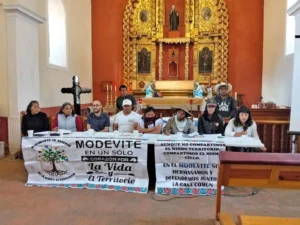
Conversation “Yes to life! No to dispossession!” on the Palenque-San Cristóbal de las Casas highway, February 2026 © SIPAZ
In February, the forum “Yes to Life! No to Dispossession!” was held in San Cristobal de Las Casas. During the meeting, residents of Chilon and other municipalities affected by the construction of the San Cristobal-Palenque highway, members of the Movement for the Defense of Life and Territory (MODEVITE), as well as human rights organizations and environmental defenders, reiterated their opposition to the project, which they stated is being built “without complying with the minimum legal requirements, without sufficient environmental, social, and cultural information, nor adequate technical information, and without a free, prior, and informed consultation in accordance with the rights of Indigenous peoples.” In the days prior, the organizations conducted an observation mission in the area; they confirmed that the highway will have a significant environmental impact. “The misnamed Highway of Cultures is an extractive project built on the interests of the most powerful.” “The poor will get poorer and the rich will get richer,” stated a member of MODEVITE. “We know that behind the facade of tourism, there is the dispossession of our territory, which is not just our plot of land, but also the way we live,” she added. Another element documented is that the government is imposing this infrastructure through harassment, conditioning the delivery of social programs like “Sembrando Vida” (Sowing Life), threats to deploy the FRIP elite force, and various other forms of manipulation.
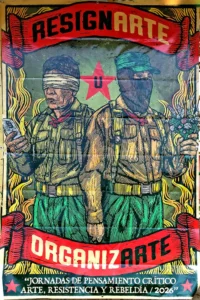
Encounter “The Storm Inside and Out According to the Zapatista Communities and Peoples”, San Cristóbal de las Casas, April 2026 © SIPAZ
In April, the “The Storm Inside and Out According to the Zapatista Communities and Peoples” Seedbed was held in San Cristobal de Las Casas. The gathering focused on the Zapatista concept of “the storm,” which describes the current global crisis caused by capitalism. During the seedbed, Captain Marcos maintained that social movements can only resist if they have clarity about their history, objectives, and organization. He rejected the idea of “unconditional unity,” proposing instead a diversity of struggles with a common goal. He argued that the nation-state has lost real power in the face of capitalism, and that current conflicts and wars primarily benefit large economic interests. Moises, for his part, presented the Zapatista collective vision on the climate crisis. He warned that without confronting environmental destruction, there will be no conditions for life in the future. Furthermore, they addressed problems in Indigenous communities: migration and poverty are causing land loss and the concentration of property ownership, weakening communal structures. Finally, Marcos announced a future meeting in August.