SIPAZ Activities (Mid-August to mid-November 2025)
12/01/2026
FOCUS: Megarailway Projects in the Southeast. Human Rights Violations, Socio-environmental Impacts, and Militarization in the Name of Development
12/03/2026
M igration and border security have been central issues in relations between Mexico and the United States, although they don’t always appear in the news spotlight. Historically, they have influenced the tone of the relationship and represent a significant element of pressure on Mexico. Certainly, bilateral trade remains very important (with Mexico as one of the main U.S. trading partners), which necessitates maintaining channels of dialogue, even when disagreements exist, particularly in light of the upcoming review of the United States-Mexico-Canada Agreement (USMCA) in July.
On the other hand, tensions have arisen. A supposed temporary closure of the El Paso airport, due to a possible drone linked to cartels, generated diplomatic tension. The U.S. attributed the closure to a drone; the Mexican government indicated it could have been a military exercise. Likewise, the country sent humanitarian aid to Cuba in the context of U.S. sanctions against the island. This has placed the administration in a diplomatic balancing act—trying to maintain relations with Cuba without antagonizing Washington. In multiple areas, President Claudia Sheinbaum’s administration is attempting to project firmness without disrupting relations with the U.S., striving to avoid direct confrontations despite disagreements on several issues, including statements by President Donald Trump proposing or threatening direct intervention in Mexico.
Mexico can boast some progress in addressing insecurity, at least in reducing homicides: in 2025, Mexico registered approximately 23,374 homicides, a reduction compared to recent years, with a rate of approximately 17.5 murders per 100,000 inhabitants, the lowest since 2015, according to preliminary official estimates. The daily average of homicides decreased from 86.9 per day in 2024 to about 54.7 per day by the end of 2025, representing a drop of approximately 37%. However, organizations like Mexico Evalua point out that disappearances have increased considerably, with figures showing increases of over 200% in the last decade, although official data varies depending on the counting method. It is estimated that more than 130,000 people have disappeared in Mexico since 2012. Sinaloa, Sonora, and Baja California Sur are listed as the states with the highest rates of missing and disappeared persons in 2025, although the problem extends beyond areas traditionally associated with organized crime. Likewise, isolated incidents of armed violence continue to occur in several states (for example, attacks against convoys and clashes between criminal groups). Finally, Mexico continues to face high levels of violence against women: although complete official figures for 2025 are not yet consolidated, estimates indicate that around ten women are murdered every day.
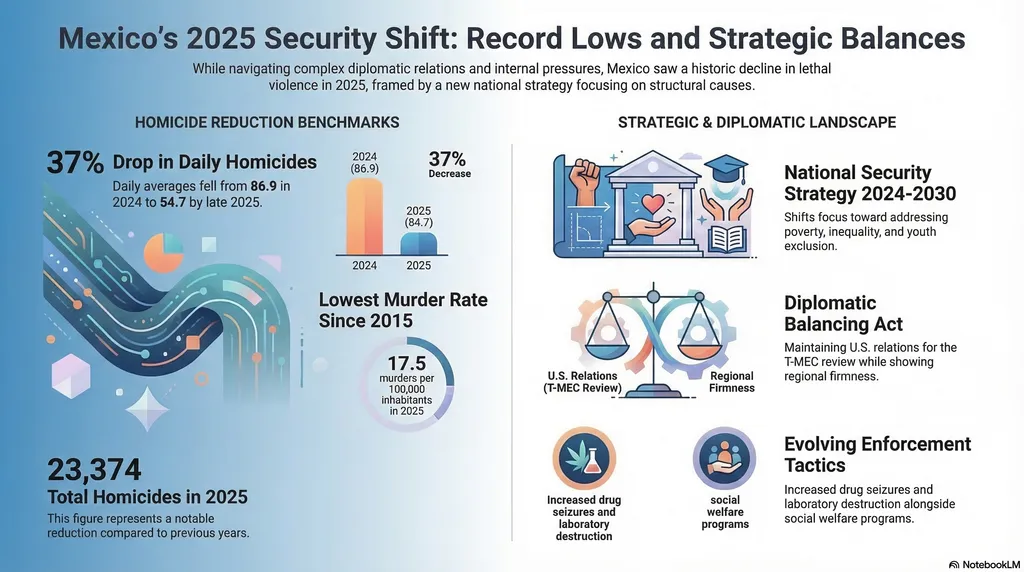
Infographic created with AI assistance – NotebookLM © SIPAZ
The federal government is promoting the 2024-2030 National Public Security Strategy, which posits that peace is built by addressing the structural causes of crime: poverty, inequality, exclusion, and lack of opportunities, rather than simply pursuing criminals. Official discourse emphasizes inter-institutional coordination and social programs linked to the well-being and development of young people as part of the preventative approach. However, since Claudia Sheinbaum took office, changes have been observed in the arrests of members of organized crime, the fight against extortion, drug seizures, and the destruction of laboratories in various parts of the country. At the same time, the emphasis on the punitive and militarized component continues. In several states, this more confrontational strategy has generated increased violence. In this regard, a recent case of the kidnapping and murder of miners in Sinaloa raised concerns about the effectiveness of federal security policies.
The armed forces continue to be deployed in citizen security tasks and the fight against organized crime. This military involvement is the subject of constant criticism from human rights organizations, which point out that when the army assumes prolonged public security functions without effective civilian oversight, abuses, extrajudicial killings, and obstacles to accountability arise. The transfer of control of the National Guard to the Army has been consolidated, a change that, according to its critics, deepens the militarization of public security in Mexico.
In any case, the implementation of the federal vision and strategies faces structural challenges due to the magnitude of the violence, the presence of cartels in many regions, and the levels of impunity, despite the judicial reform promoted by Sheinbaum in 2025.
In November, Alejandro Gertz Manero resigned as Attorney General of Mexico, leaving the post after nearly seven years, despite his term being scheduled for nine. Before leaving, he set in motion the transition within the Attorney General’s Office (FGR), which was placed in the hands of Ernestina Godoy—legal counsel to the President and a close associate of Claudia Sheinbaum—while the Senate selects the person who will permanently fill the position.
Several civil society organizations criticized Gertz for leaving the institution “without being held accountable,” noting that his departure was marked by a lack of transparency. Furthermore, he left numerous high-profile investigations unresolved, without reaching a verdict or firm conclusions. These include cases of corruption, fuel smuggling—known as “fiscal fuel theft”—, irregularities in customs, money laundering operations, possible acts of embezzlement, and cases involving high-profile individuals and companies, among others.
Human Rights: Concerns and Recent Cases

Activities in Tuxtla Gutiérrez within the framework of the International Day of the Disappeared, August 2025 © SIPAZ
On December 10th, in the framework of International Human Rights Day, more than one hundred organizations, networks, collectives, and human rights defenders warned about the persistence of serious structural problems that impede the full exercise of human rights in the country and presented a comprehensive assessment of current challenges.
One of the main concerns raised was the situation of human rights defenders and journalists, who face a context of escalating violence. In 2025, at least six journalists and fourteen human rights defenders were murdered for their work. Impunity, the lack of institutional responses, and the absence of protection policies with gender, intersectional, and territorial approaches increase the risks, especially for Indigenous communities and organizations that defend the environment, water, and collective rights. The signatories also criticized the criminalization of journalism through legal mechanisms such as cyber harassment and crimes against honor, as well as recent laws that, due to their broad wording, threaten freedom of expression and the use of digital media.
They also noted that enforced disappearance remains one of the most serious human rights crises. Although legislative initiatives exist, they are insufficient given the magnitude of the problem. As of September 30th, 2025, more than 132,000 people were registered as missing and unaccounted for, with an alarming average of 45 disappearances per day in September of that year alone. The crisis is exacerbated by the lack of prevention policies, the absence of a comprehensive search strategy, and the severe forensic crisis, with more than 72,000 unidentified human remains. In this context, women searchers have taken on tasks that belong to the State, facing extreme risks; at least 30 relatives of missing persons have been murdered, most of them women.
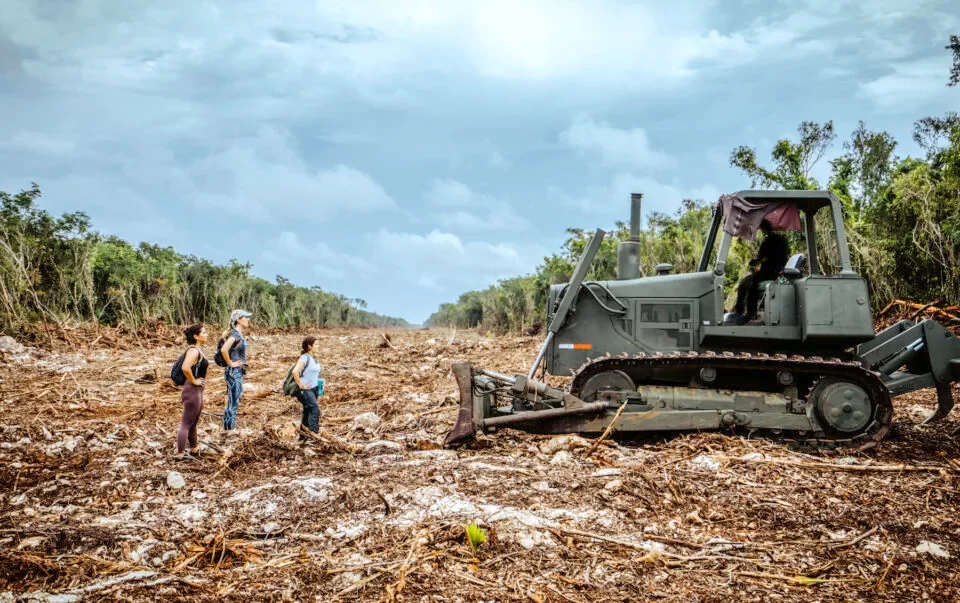
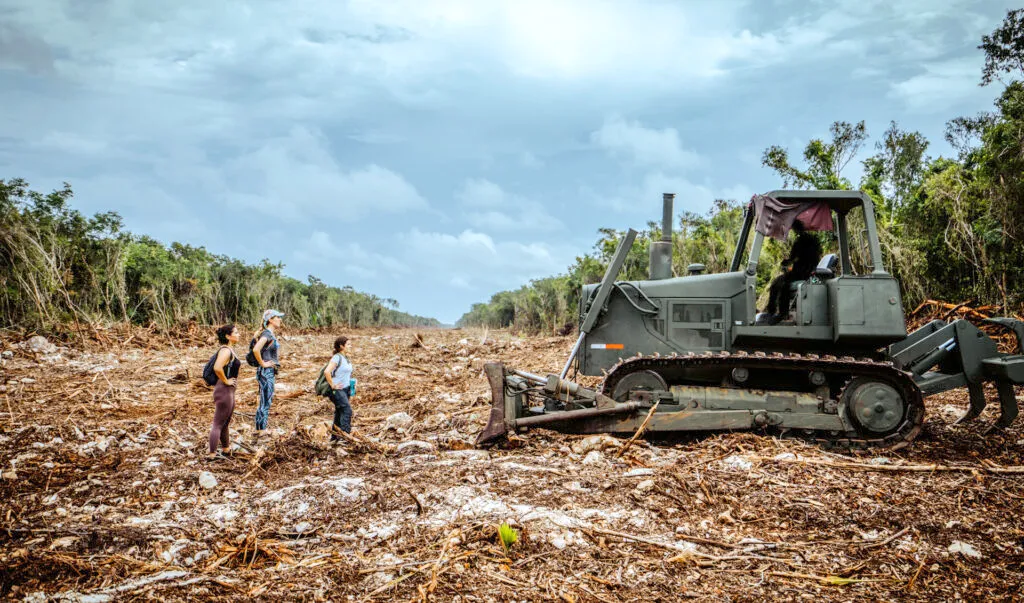
The lack of robust regulations on business and human rights was also highlighted, which is essential to prevent the impacts of megaprojects and extractive activities on territories and communities. This omission is especially concerning given the push for new investments through Plan Mexico, which was not consulted with the affected communities and promotes projects with negative impacts on economic, social, cultural, and environmental rights.
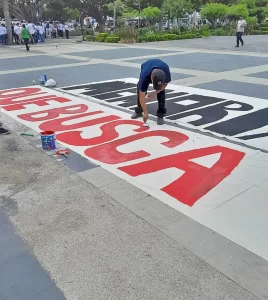
Activities in Tuxtla Gutiérrez within the framework of the International Day of the Disappeared, August 2025 © SIPAZ
Likewise, the approval of a General Law on Internal Forced Displacement remains pending, despite the increase in this phenomenon in several states of the country, the statement denounced.
Social protest continues to face repression, excessive use of force, and restrictive legal frameworks, in addition to stigmatization by those in power. The organizations also questioned the federal security strategy, noting that militarization and the permanent deployment of the National Guard have not improved security and have alarmingly expanded the power of the armed forces without adequate controls.
Regarding historically vulnerable groups, deficiencies persist in the protection of children, youth, LGBTTTIQ+ people, Indigenous peoples, and women. In the case of the latter, the figures for femicides, homicides, and disappearances reflect a sustained crisis of violence, aggravated by impunity and the lack of comprehensive prevention policies, despite some recent institutional progress.
Finally, concerns were expressed regarding access to justice, judicial reform, the persistence of torture, the excessive use of pretrial detention, the criminalization of migration, and inhumane conditions in prisons. Given this situation, the organizations demanded that the next National Human Rights Plan incorporate international recommendations, establish concrete actions, and guarantee permanent spaces for dialogue, evaluation, and accountability, with the aim of structurally transforming the human rights situation in Mexico.
CHIAPAS: Clashing Perspectives on the Situation in the State
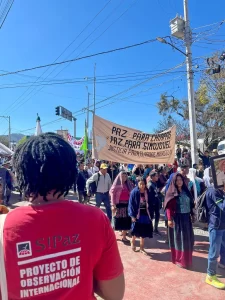
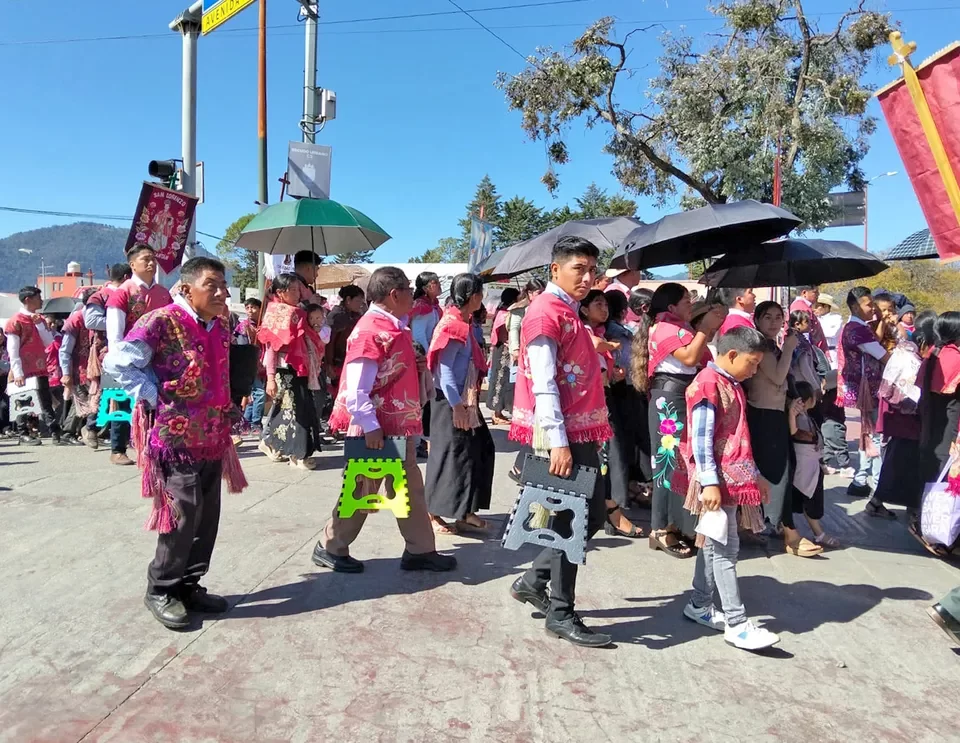
Pilgrimage of Pueblo Creyente of the Diocese of San Cristóbal de las Casas, January 2026 © SIPAZ
In December, the governor of Chiapas, Eduardo Ramirez Aguilar, presented his First State of the State Address and stated that in just one year his administration had achieved progress that many considered impossible: restoring peace, the rule of law, and good governance in a state that had been mired in a wave of violence fueled by disputes between organized crime groups.
He commented that before his arrival, Chiapas was plagued by murders, shootouts, bodies found hanging, decapitated, and highway robberies. Ramirez attributed the change to the new security strategy implemented in conjunction with President Claudia Sheinbaum, Federal Security Secretary Omar Garcia Harfuch, the Armed Forces, and state and federal law enforcement agencies.
He reported that during his first year, approximately 6,000 people were arrested, of whom 5,000 remain in custody. He commended the state’s judiciary for not releasing alleged criminals, as he said had been happening previously. A video was also presented showcasing the investments made: a Black Hawk helicopter, armored vehicles, drones, surveillance cameras, mobile bases, and salary increases for police officers.
In addition to security, the governor highlighted progress in education, health, the environment, tourism, and infrastructure. These included a literacy program, the start of construction on the Palenque–San Cristobal de Las Casas highway, road reconstruction, the creation of the airline Balam to connect Chiapas with other states, and scholarship and food assistance programs for vulnerable populations.
For next year, he announced new initiatives: boosting the Welfare Hubs, support for coffee, corn, and fish producers, scholarships for students and athletes, incorporating artisans into the social security system, restoring micro-watersheds, programs for women, and public works projects carried out with local companies and under transparent criteria. Ramirez affirmed that “Chiapas has awakened” and that the state is progressing toward becoming the “giant of the south.” He acknowledged that historical challenges still exist—poverty, inequality, agrarian conflicts, educational backwardness, deficiencies in basic services, violence, and discrimination against indigenous communities—but assured that his government will continue working to address them.
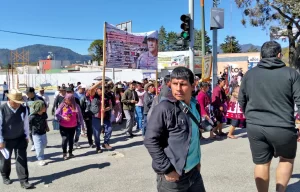
Pilgrimage of Pueblo Creyente of the Diocese of San Cristóbal de las Casas, January 2026 © SIPAZ
This hopeful outlook clashes with the perception of human rights organizations, which point out that violence persists and that the militarization of security has not resolved the structural conflicts. In December, the Border Region Working Group, formed by several civil society organizations, published the preliminary report “Chiapas 2025: The Pending Peace.” “The state government has opted for the Pakal Immediate Reaction Force (FRIP) as the cornerstone of its pacification strategy; its actions have deepened the militarization of the region and generated new risks for the civilian population, such as arbitrary detentions and abuses of power,” the report states. Furthermore, it details that forced displacement remains a constant, the organizations assert. Between 2023 and 2024, more than 8,000 people were displaced from their communities; although many returned in 2025, they did so without any real guarantee of safety. Others remain displaced or experience intermittent displacement, moving between their communities and other municipalities or even Guatemala, due to persistent threats and the presence of armed groups. Another critical issue highlighted in the report is the increase in forced disappearances. In 2025, at least 29 people were reported missing in border municipalities, primarily in Frontera Comalapa and La Concordia, although significant underreporting is acknowledged due to fear of reporting. “Peace in Chiapas remains elusive. The persistence of violence, disappearances, forced displacement, and the lack of reliable official data render victims invisible and hinder the development of effective public policies, leaving border communities in a climate of fear, uncertainty, and institutional abandonment,” the report concludes.
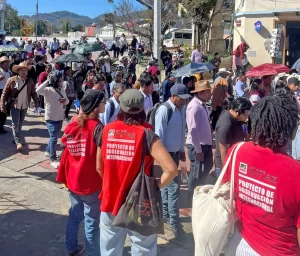
Pilgrimage of Pueblo Creyente of the Diocese of San Cristóbal de las Casas, January 2026 © SIPAZ
From this same region, also in December, the Pueblo Creyente (Believing People) of Chicomuselo expressed their concern about the normalization of violence and the contradiction between the official discourse of pacification and the daily reality faced by the communities. They stated that the state “is bathed in the blood of innocent people,” victims of massacres, disappearances, kidnappings, forced displacements, and murders resulting from the territorial struggle between criminal groups. “The narrative that peace has arrived in Chiapas is not supported by reality. Peace is not imposed by decree, but rather built with justice, truth, and the recognition of the dignity of the people,” they said.
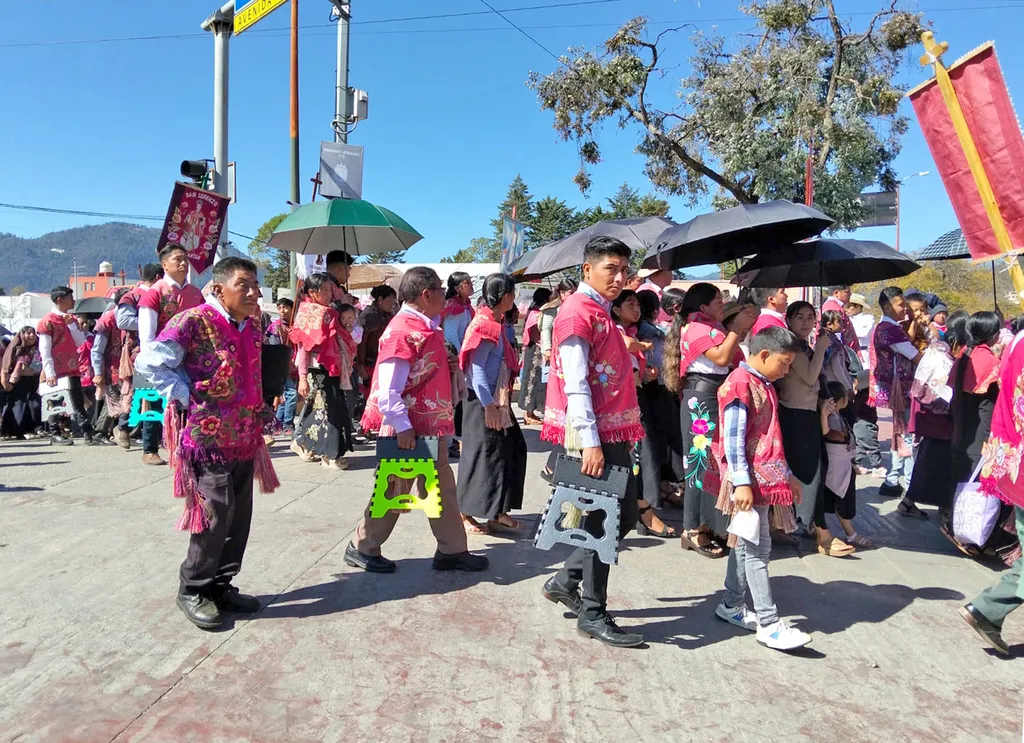
More broadly, on January 25th, the traditional Pilgrimage of the Faithful People of the Diocese of San Cristobal took place in San Cristobal de Las Casas to honor the memory of Samuel Ruiz Garcia, known as Tatik Samuel, on the 15th anniversary of his death. More than 10,000 people from different municipalities in Chiapas demanded peace and justice for their communities. They declared, “We continue to denounce the violence perpetrated by organized crime in some municipalities of our state of Chiapas, including armed confrontations, murders, disappearances, kidnappings, extortion, intimidation of residents in these communities, and the forced attendance at public events or the manning of fake checkpoints, with fines imposed for refusal. All of this leads to internal displacement. People remain silent out of fear of losing their lives.”
Between December and February, multiple violent incidents were reported, including murders, clashes, vehicle burnings, and disappearances in Villaflores, another area. These incidents are believed to be related to a conflict between two organized crime groups vying for territorial control of this region, which connects the Sierra Madre mountains with the center of the state. Dismembered bodies were also reported in the state capital, Tuxtla Gutierrez. The state government implemented several operations and made some arrests; the most significant was that of a man known as “El Espiritu” (The Spirit), whom authorities identify as a “turf boss” in several areas of Chiapas. The promise to reinforce checkpoints and security checkpoints in Tuxtla Gutierrez and throughout the state has not completely quelled fears that the turf war will reignite with greater aggression.
Organized Processes Continue to Mobilize

Zapatista Encounter “Of Pyramids, Histories, Loves and, of course, Heartbreaks”, December 2025 © SIPAZ
In addition to the pilgrimages already mentioned, a series of activities were carried out in November in San Juan Cancuc as part of the 12th anniversary of the Movement in Defense of Life and Territory (MODEVITE). During these activities, they demanded, among other things, that the Mexican State respect their right to self-determination, autonomy, and their own normative systems; that the San Cristobal–Palenque highway project be definitively canceled; that extractive megaprojects be halted throughout the Maya, Zoque, and Chol territories; and that the voices of Indigenous peoples be heard in international forums such as COP 30, and that their fundamental role in the defense of Mother Earth be recognized.
From December 26th, 2025, to January 1st, 2026, the Zapatista Army of National Liberation (EZLN) celebrated the 32nd anniversary of the Zapatista uprising at the CIDECI in San Cristobal de Las Casas and later at the Caracol of Oventik. Sub-commander Moises and Captain Marcos participated in all the sessions of the workshop “Of Pyramids, Histories, Loves, and, of course, Heartbreaks.” They asked their guests to speak about “pyramids and the manipulation of history within the economic system, bad governments, laws and the judicial structure, resistance movements, the left and progressivism, human rights, the feminist struggle, and the arts.”
The program included a series of meetings with intellectuals, activists, and members of civil society. The central moment of the celebration took place on December 31st at the Caracol of Oventik, where the 1994 uprising was commemorated.
Groups particularly Vulnerable to Violence: Women, Children, and Human Rights Defenders
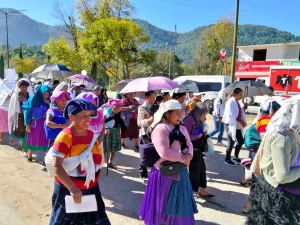
Pilgrimage of the Diocesan Coordination of Women (CODIMUJ), San Cristóbal de las Casas, November 25, 2025 © SIPAZ
On November 25th, 2025, as part of the International Day for the Elimination of Violence against Women, approximately 800 members of the Diocesan Women’s Coordinating Committee (CODIMUJ) marched in San Cristobal de Las Casas to demand an end to violence against them. In Tuxtla Gutierrez, they denounced the fact that, despite institutional campaigns and official pronouncements, impunity, femicides, disappearances, and systematic violence against women and girls persist in Chiapas. By December, the feminist collective 50 plus 1 had registered at least 31 cases of femicide in 2025. On the other hand, according to the Network for the Rights of Children and Adolescents in Chiapas (REDIAS), in 2025 the State Attorney General’s Office issued approximately 460 missing persons reports for children and adolescents, representing more than one case per day. The data indicates that the most affected group is 15-year-old girls (seven out of ten reports). REDIAS also highlighted that during 2025, 16 homicides, nine femicides, 328 reports of child sexual abuse, the deportation of 635 children and adolescents from Chiapas from the United States, and the detention of 8,656 migrant children in the state were documented, of whom 876 were returned to their countries of origin.
Finally, in January, the discussion “The Situation of Human Rights Defenders in Chiapas: The Challenges of Their Protection” brought to light the vulnerability of this sector. The UN Special Rapporteur on Human Rights Defenders, Mary Lawlor, participated and, after meeting with human rights defenders, stated, among other things, that “there is no security for human rights defenders in Chiapas,” because the Mexican government “is merely painting a picture of peace” and “militarization, organized crime, megaprojects, and the criminalization of human rights defenders put them at risk.” She also noted that there are many people in the state who “want peace, but are paralyzed by fear.”
In the most recent case illustrating this vulnerability, in February, human rights defender Poulette Celene Hernandez was the victim of physical attacks, death threats, and acts of harassment in the municipality of Tonala. According to documentation from the Digna Ochoa Human Rights Center, on February 8th, three people went to her home, where they insulted, threatened, and physically assaulted her. The day before, on February 7th, possibly due to the presence of other people in the house, four men on motorcycles arrived outside her home and made threats before leaving, in what is considered a prior act of intimidation. Poulette Celene Hernandez is a lawyer who works with women on the coast of Chiapas, supporting victims of violence and promoting training in human rights, community health, and agroecology. Her work takes place in a context of high social conflict, recently marked by complaints related to the Interoceanic Corridor and alleged collusion between authorities and criminal groups.
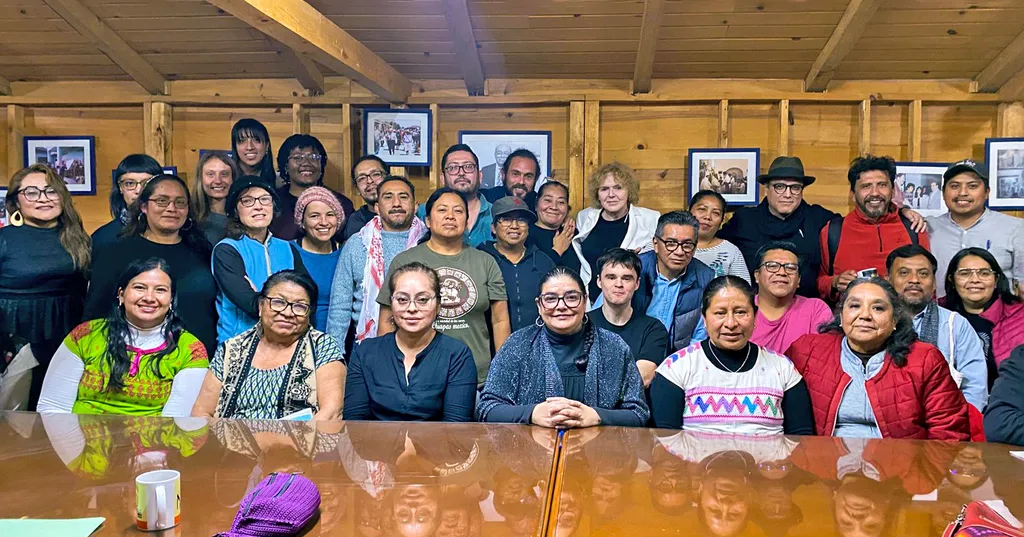
Meeting with the UN Special Rapporteur on Human Rights Defenders, Mary Lawlor, San Cristóbal de las Casas, January 2026 © SIPAZ