SIPAZ Activities (Mid-February to Mid-May 2025)
11/06/2025
FOCUS: Tenth Hearing of Mexican State before CEDAW
09/09/2025N egotiations between Mexico and the United States have become a constant since Donald Trump returned to the presidency in January of this year, within a relationship marked by political, economic, and military asymmetry. Since then, both the US president and Mexican President Claudia Sheinbaum have held talks amid constant tensions.

Sheinbaum and the Mexico-US relationship © Radiorama
The most recent episode occurred this week, when Trump asserted that “Mexico does what we tell them to do” regarding border security. In response, Sheinbaum retorted that “President Trump has a particular way of speaking, but (…) in Mexico, the people are the boss.”
These statements came shortly after the Mexican government handed 26 cartel members over to the United States for prosecution, and following the agreement reached at the end of July, which established a 90-day truce on the tariffs Washington seeks to impose in order to continue negotiations. The Mexican president reiterated her willingness to collaborate in the fight against drug trafficking, but stressed that “sovereignty is not up for negotiation.” This pattern has been repeated on previous occasions: Trump increases the pressure on trade, while Sheinbaum responds with a moderate tone, although generally accompanied by some commitment on security matters.
Regarding migration, the United States arrested more than 352,000 undocumented immigrants in the first 200 days of the Trump administration and has deported 324,000, according to a report by the Department of Homeland Security. In June, the Fray Matias de Cordova Human Rights Center spoke out against the “growing macropolitics engineered by states in the region, which instrumentalizes immigration detention to punish and break the will of migrants, dissuade them from exercising their rights and abandoning their migration and/or life plans.” According to the organization, in recent months, Mexico and several Central and South American countries have adopted immigration policies imposed by the United States, under pressure through economic measures.
The NGO warned that “in Mexico, (…) people on the move continue to suffer serious human rights violations in immigration detention, despite the State’s attempts to disguise their carceral nature with euphemisms such as ‘shelters’ or ‘accommodation spaces.’ These centers continue to operate under a punitive control architecture that currently goes unnoticed by the public.”
Mexico: Low Turnout in Judicial Elections
With approximately 13% of the electorate participating, the electoral process for the selection of judges and magistrates across the country took place on June 1st. In 2024, Mexico implemented a reform of the judiciary that has sparked broad debate among specialists, lawyers, and political players. While the legislative amendment arises from the urgent need to combat structural problems, such as corruption, nepotism, and the lack of professionalism that have historically plagued the Mexican judicial system, risks of implementing a popular election system have been pointed out, as it could affect the independence of the judiciary, as well as its transparency and efficiency.
After the elections, Claudia Sheinbaum’s government rejected the preliminary report prepared by the Electoral Observation Mission of the Organization of American States (OAS), in which the organization recommended against replicating the popular election model for judges in any other country in the region. The Foreign Ministry reported that it sent a diplomatic note to the international organization, accusing the mission of issuing “value judgments” that “exceed its powers.” The Observation Mission’s report noted that the winning candidates are the same ones who appeared on the “accordions” distributed before the elections—mostly attributed to the ruling MORENA party—and that they were selected by the Executive Branch. It emphasized that some of the electoral observers present at the polling stations acknowledged that they were sent by political parties—something prohibited—and recalled that the 87% abstention rate and the high number of spoiled votes made the judicial election the election with the lowest turnout in the region.
Fighting Violence: Between Change and Continuity

National Guard © Presidency of the Republic of Mexico
Replacing the previous administration’s security strategy based on the “hugs, not bullets” policy, the current Federal Government launched the “National Public Security Strategy 2024-2030.” While this plan revived the previous administration’s approach to addressing the structural causes of violence, changes have been observed in the arrest of organized crime figures, the fight against extortion, drug seizures, and the destruction of drug laboratories in various parts of the country.
The Mexico: Citizen Security and Democracy Report, by the Ibero-American University, presented in June, emphasizes that “the levels of violence in Mexico have not decreased.” It shows that, in response, the Federal Government has prioritized military deployment and penal reforms aimed at punishment, such as increased sentences and the expansion of crimes subject to pretrial detention. It emphasizes that the strengthening of civilian institutions has been neglected, and that the dependence on the Army has increased.
In this regard, in June, MORENA and its allies approved the constitutional reform that gives the Ministry of National Defense operational control and command of the National Guard. The law will give the National Guard powers over intelligence, wiretapping of phone calls, social media, and emails, subject to judicial authorization. Civil organizations warned that “illegal and abusive surveillance by the armed forces is a repeated practice that we have warned about and convincingly documented (…) and that has been carried out selectively against journalists, human rights defenders, researchers, and even public officials.”
Human Rights Issues

Mothers in Resistance Collective, searching mothers in Chiapas, Tuxtla Gutiérrez, August 2025 © SIPAZ
In June, more than 300 groups of relatives of missing persons demanded that the legislature convene an open parliament to discuss President Sheinbaum’s bill to reform the law on the disappearance of persons. They complained that only the roundtable discussions convened by the Ministry of the Interior were held, and that not all platforms representing relatives of missing persons attended. “This is an initiative we do not support, mainly because it does not address the serious problems we face as relatives of missing persons,” they stated. They also accuse her of wanting to “impose a system of mass surveillance,” which “could be dangerous for the safety of all people in Mexico.” They demanded “that an Open Parliament be convened to publicly discuss the Federal Executive’s initiative. Failure to do so would concretize the process of simulation, which will result in greater impunity and prolong the torture we families endure,” the signatories warned.
In its most recent report, Reporters Without Borders (RSF) documented that Mexico remains the most dangerous country in Latin America for journalism: since January 2025, it has documented the murder of eight journalists in the country. This, “despite the commitments made by the presidency and the implementation of protection mechanisms,” the organization noted. “Most of the victims worked for local or community media outlets and covered sensitive issues such as corruption, organized crime, the environment… Several of them had already received threats or were the targets of smear campaigns. Two journalists were even under police protection at the time of their deaths. Although investigations have been opened into most of these crimes, they often go unsolved, perpetuating a climate of fear,” it emphasized.
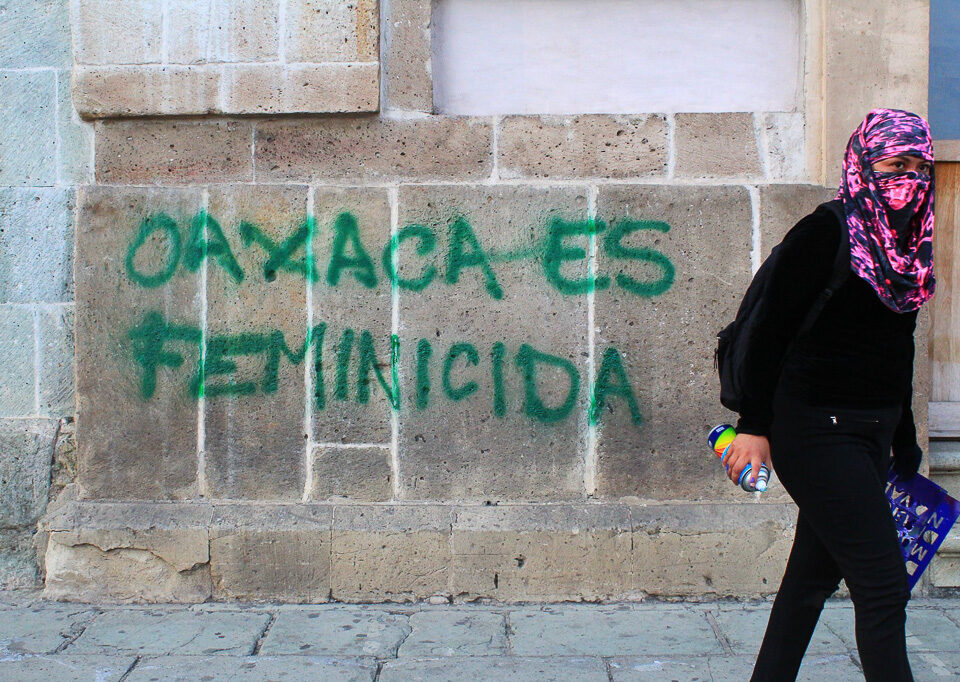
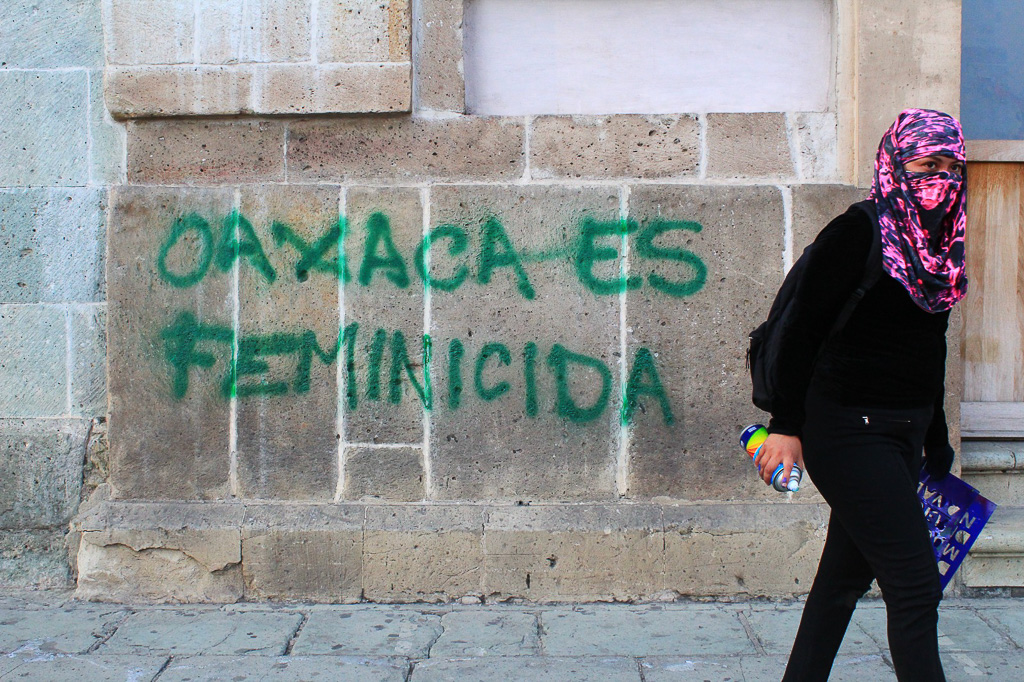
In June, the Mexican state rendered its accountability within the framework of the 91st session of the United Nations (UN) Committee on the Elimination of Discrimination against Women (CEDAW) in Geneva, Switzerland. In July, CEDAW presented its conclusions: while celebrating the arrival of the country’s first female president and the creation of the Secretariat for Women, it expressed concern about the “omnipresence” of violence against women and girls in Mexico, and through 90 recommendations, urged the Mexican State to make an “effective and sustainable” investment in gender equality (see Focus).
CHIAPAS: “A violent reality disguised as peace”
In May, the Las Abejas Civil Society group denounced that “the reality we are experiencing today is more dangerous (…) because the paramilitaries have become hitmen.” They declared that “there was no disarmament by the Pakal Immediate Reaction Forces. The encampments of the military, the National Guard, and the police do not guarantee the tranquility of the communities; some have seen signs of complicity (…). The Pakales operations were applauded spectacles; the hitmen went into hiding; now they walk around at all hours of the day, and nothing happens. We are living in a violent normality disguised as peace.”

Pilgrimage of the Believing People in Chilon, August 2025 © SIPAZ
In June, authorities from the Tzajalchen community in the municipality of Chenalho and the Las Abejas Civil Society group reported that armed individuals fired high-caliber weapons “at the location where we were holding a coordination meeting to resolve a problem regarding drug sales.” Dozens of civil society organizations expressed their solidarity, stating that “this attack demonstrates the systematic violence that continues to affect communities in the Highlands,” which has included armed attacks; the presence of armed groups linked to organized crime in collusion with government structures; state intervention that fails to provide security; intentional blockades; and the criminalization of community leaders.
Another area that remains highly tense is the border with Guatemala. In June, five members of the State Preventive Police (PEP) were ambushed and killed in the municipality of Frontera Comalapa. The Secretariat of Public Security reported that the attack was perpetrated by an organized crime group that later fled to Guatemala. Subsequently, an armed confrontation occurred between security forces and alleged members of organized crime in the same municipality, leaving at least four alleged criminals dead. The confrontation forced the attackers to retreat to Guatemalan territory, where they were also intercepted by the Guatemalan Armed Forces. FRIP members crossed the border, which could have sparked a diplomatic incident.
Kidnappings have been reported again in Frontera Comalapa. Despite the fact that violence supposedly decreased after the change in state government last December, residents claim that “insecurity continues; the Pakales are there, but they don’t do much; it seems there is complicity,” they asserted. Chiapas Governor Eduardo Ramirez declared that there are no formal complaints regarding these incidents. In August, the state attorney general, Jorge Luis Llaven Abarca, indicated that there are currently no reports of violence or forced displacement in the Sierra. He stated that a certain fear fueled by “fake” news persists.
Several FRIP members have been accused of alleged acts of corruption and collusion with organized crime. At the end of May, Governor Eduardo Ramirez ordered the dismissal of Jose Carlos Lemus Vidal, commander of the Pakales in the municipality of La Concordia, after one of his agents reported him for collusion with criminal groups. Separately, in July, Gustavo Ruiz Laparra, legal director of the State Attorney General’s Office, was arrested on alleged kidnapping and extortion charges. The arrest of a high-level official raised serious questions about the possible infiltration of organized crime within the institution.
Separately, in July, the Fray Bartolome de Las Casas Rights Center (Frayba) denounced the intimidation it has been subjected to in recent months, the most recent being the raid on the home of Dora Roblero, director of Frayba, which occurred earlier this month in San Cristobal de Las Casas. It stated that “in less than ten months, this would be the second raid against a member of Frayba, in a context marked by harassment, intimidation, and systematic surveillance.”
Processes in Defense of Land, Territory, and Life
The Movement in Defense of Life and Territory (MODEVITE), the community government of Chilon, and various localities in the area, demand the cancellation of the construction of the Palenque-San Cristobal de Las Casas highway. On June 8th, Governor Eduardo Ramirez inaugurated the highway’s construction and declared that “it will be a catalyst for social, economic, commercial, and tourism development.” He asserted that “it will not be concessioned, as it belongs to the communities and will be built with full respect for the environment.”

Pilgrimage of the Believing People in Chilon, August 2025 © SIPAZ
However, the organizations pointed out that “in the process organized by the government, the consent of a small, powerful group was obtained that does not represent the feelings and thoughts of our peoples. This project represents the beginning of the devastation of our Mother Earth and all the life we have preserved for centuries (…) in addition to altering community ways of life, facilitating territorial dispossession, and paving the way for extractive interests.” For this reason, they demanded “the immediate cancellation of the highway project.”
The injunction filed to halt construction was rejected in July. Representatives of the affected communities await the resolution of an appeal for review they filed following the denial of the definitive suspension.
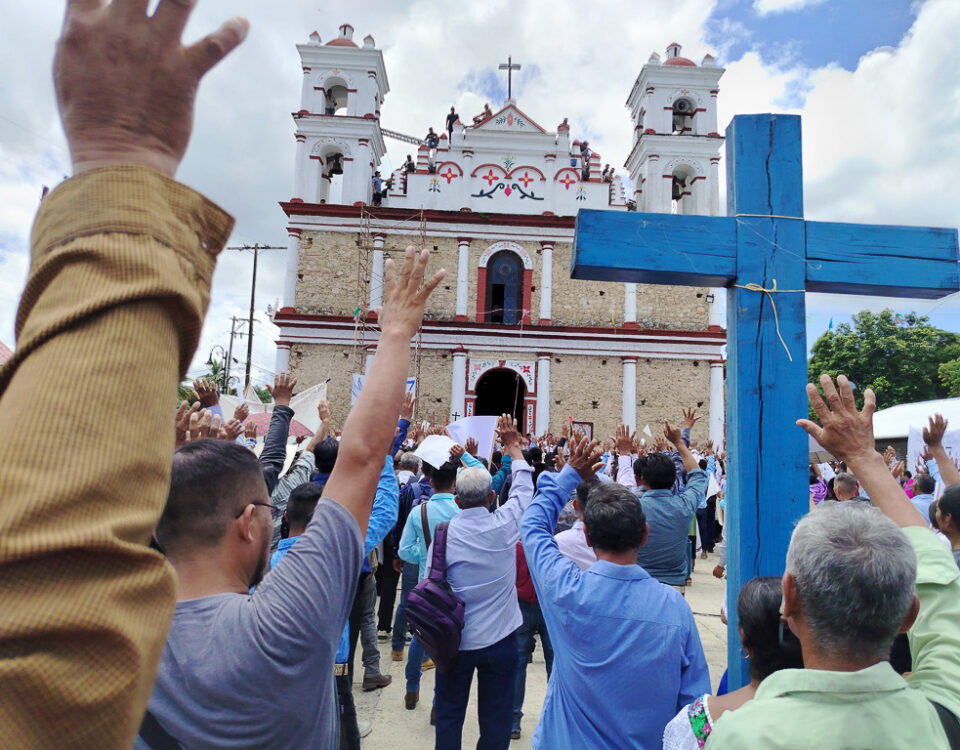
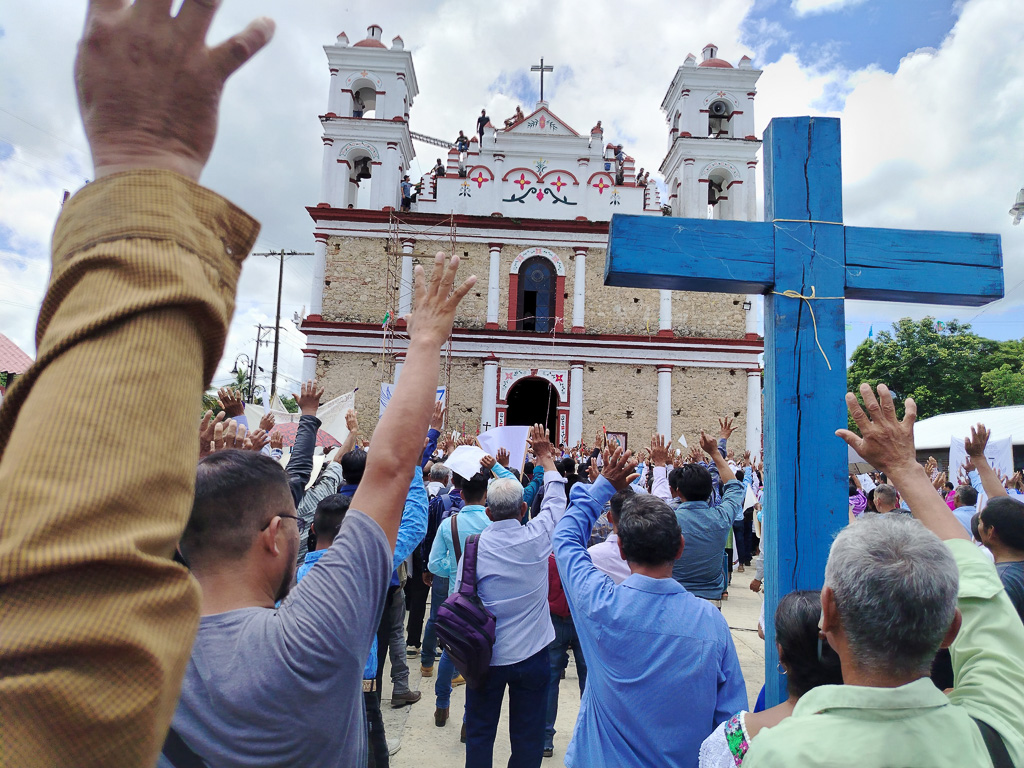
In August, more than 3,000 people held a pilgrimage in Chilon to express their opposition to the construction of the San Cristobal-Palenque highway. The communities consider the highway project a threat to their territories, the environment, and their autonomy. The lands that would be affected are located in Chilon, Ocosingo, Yajalon, and Tila and include agricultural areas, sacred lands, and ecological areas. Those attending also expressed concern about the growing militarization in the region and the criminalization of community defenders. They denounced acts of dispossession, threats, and the extraction of materials without consent, and demanded that the two injunctions filed be addressed.
In other forms of resistance, the “International Meeting in Defense of Life: Corn, Water, Territory, and Mother Earth” was held in July in the municipality of Chilon. Participants denounced that indigenous peoples’ territories are threatened by megaprojects imposed by governments without their consent, and that consultations are being used to perpetrate dispossession. They also pointed out the militarization of their territories, as well as the presence of organized crime and its complicity with the authorities. They demanded respect for the autonomy of indigenous peoples.
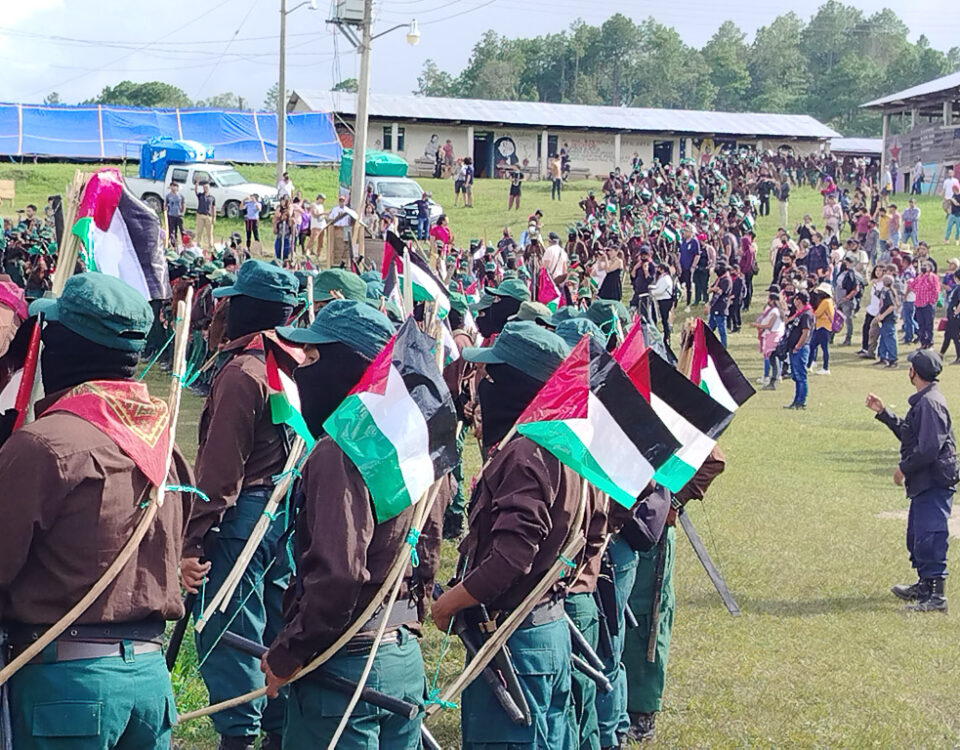
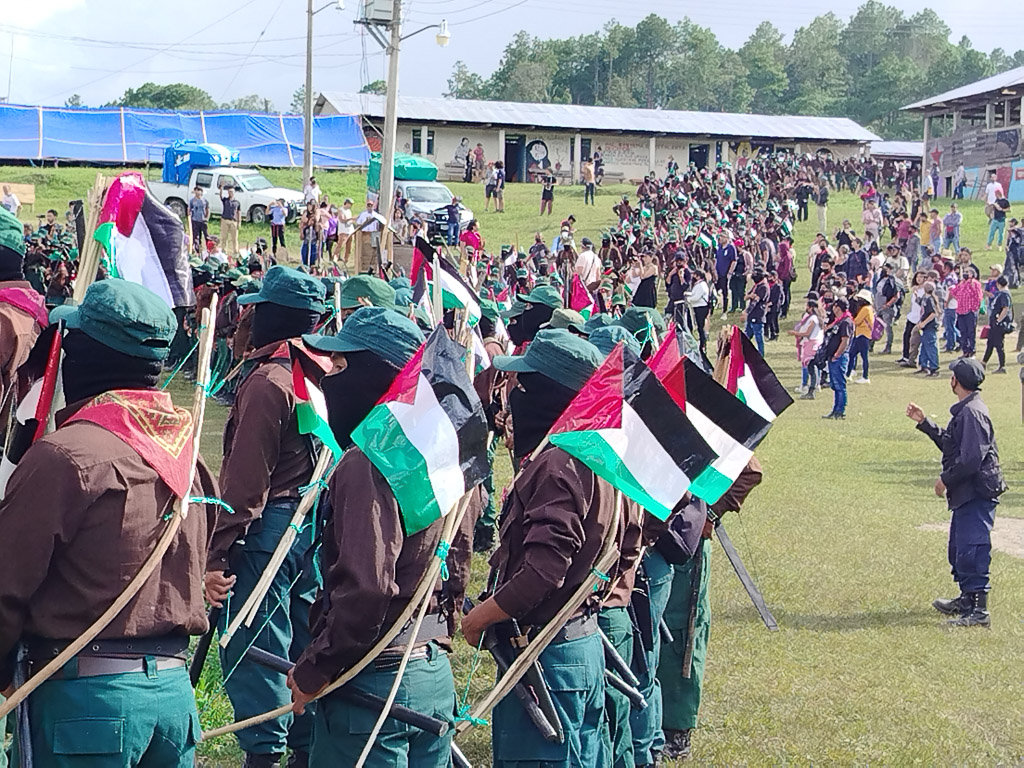
In August, the international meeting “Resistance and Rebellion: Some Parts of the Whole,” convened by the Zapatista Army of National Liberation (EZLN), was held in the Caracol of Morelia, in the municipality of Altamirano. Participants from 37 countries discussed the following topics: as women that we are; destruction of nature; attacks on difference in all its forms; destruction of identities, peoples, and communities; resistance and rebellion in art and culture; migration, racism, segregation; wars and the destruction of life; among others.
“Unfinished Justice” (Frayba)

Father Marcelo Perez Perez © Instagram pbromarceloperez
July marked the fourth anniversary of the murder of Simon Pedro Perez Lopez, a catechist and former leader of the Las Abejas de Acteal Civil Society. Frayba emphasized that “although the perpetrator has been sentenced, justice remains incomplete, as the FGE (Federal Attorney General’s Office) has not exhausted all lines of investigation or clarified the responsibility of the masterminds, an omission that (…) becomes a form of tolerance of violence against those who defend life.” “The impunity that surrounds our colleague Simon’s case is the same that covers the violence plaguing the Highlands region, amid a diversification of armed and criminal groups,” it stated.
In August, Frayba took a position against the 20-year prison sentence handed down to the “material perpetrator” of the murder of Father Marcelo Perez Perez, “maintaining the injustice through an institutional strategy that obscures the truth, without providing evidence that would lead to the masterminds.” It denounced that “the accusations against Father Marcelo, which attack, intimidate, and silence his work as a defender of the human rights of Indigenous peoples, are part of a pattern of criminalization against defenders in Chiapas.” It called on the Mexican state to “investigate without shortcuts or pacts of impunity. Because when someone fighting for life is executed, it is not enough to condemn: we must name, clarify, and transform.”
OAXACA: Human Rights Defenders Continue to Face Attacks and Criminalization

Zapotec human rights activist Silvia Perez Yescas reported multiple attacks and threats by local armed groups led by Cesar Pulido Herrera, an official of the National Institute of Indigenous Peoples © EDUCA
In May, representatives of 33 civil society organizations denounced the serious human rights crisis in Oaxaca. They particularly highlighted the situation of human rights defenders, having documented the murder of 58 of them, 55 of whom were indigenous. They also denounced the criminalization of social protest, which occurs primarily in indigenous communities, against community defenders and members of civil society organizations. “The murders of community members are due to the persistence of agrarian conflicts, and community opposition to megaprojects on their lands has led to forced displacement, the division of the social fabric, murders, and the threat of imprisonment of defenders,” they stated. The report also highlights the impunity and failure to report victims, “a product of government inaction and even the negative repercussions when complaints are filed, including loss of life.”
In the most recent example, in June, civil society organizations demanded protection guarantees for the gender equality organization CIARENA, following a new raid on its offices in San Juan Cotzocon. This incident adds to a series of attacks and harassment they have suffered for their work. Cesar Pulido Herrera, a current official of the National Institute of Indigenous Peoples (INPI) and former municipal agent of Maria Lombardo, has been named as the alleged perpetrator of the threats against them. “Despite the fact that state and federal authorities are aware of the accusations and background information, the attacks continue in a climate of total impunity,” civil society organizations denounced.

Regional Forum: Defense of Territory and Autonomy against Megaprojects
In June, in the framework of the 40th anniversary of the Union of Indigenous Communities of the Northern Zone of the Isthmus (UCIZONI), a march was called in the municipalities of Matias Romero and Santa Maria Petapa. The event stopped on the Isthmus of Tehuantepec Railroad tracks to “demand an end to the criminalization of dozens of Indigenous Peoples whose only crime is defending their homes and lands.” From 2022 to 2024, 55 investigations were opened against defenders who opposed the Interoceanic Corridor. They also remembered more than twenty colleagues murdered for their work defending land and territory.
Against this repressive backdrop, in August, more than 150 representatives of Indigenous communities and 17 social organizations concluded the “Regional Forum: Defense of Territory and Autonomy against Megaprojects” in Santo Domingo Tehuantepec. “We are facing an unprecedented capitalist government onslaught of the extractive model that, under the guise of development and public utility, imposes megaprojects such as mining, water concessions, tourism projects, and the Tehuantepec Isthmus Interoceanic Corridor, without respecting our collective rights, our ways of life, our relationship with the land, and life itself,” they stated. They demanded that the Mexican federal and state governments fully respect the rights of Indigenous peoples to self-determination and autonomy.
GUERRERO: “Justice that never comes,” Tlachinollan
In June, the former mayor of Iguala, Jose Luis Abarca, was acquitted in the case of the disappearance of 43 students from the Ayotzinapa Rural Teachers’ College in September 2014. This was due to insufficient evidence, and the appeal filed by the parents of the 43 students was denied. They sought to overturn the 2019 ruling that exonerated him of organized crime charges involving kidnapping and drug trafficking. Abarca had been identified as one of the alleged perpetrators in the case since the initial investigations. Despite the acquittal, the former official will remain in prison, having been sentenced to 20 years in prison for murder, and is also subject to prosecution for money laundering and public health offenses. President Sheinbaum expressed her disagreement “with the fact that judges, without any explanation, acquit when there is support in the investigation.” She expressed confidence that, with the new configuration of the Judiciary, they will be able to evaluate the work of judges and magistrates and, in the event of irregularities, sanction them.

Marco Antonio Suastegui Muñoz © La Montaña Tlachinollan Human Rights Center
In July, the families expressed their annoyance, believing that the controversial “historical truth” from the previous administration in the case is being revived. In response to the disagreement, President Claudia Sheinbaum asserted that what was presented does not correspond to the work of the new special team, which operates out of the Secretariat of Citizen Security and would be implementing a different strategy, with technological support. She asked that it be given an opportunity to demonstrate the new direction of the investigation. Meanwhile, the families have continued to demand that the recommendations of the OAS Interdisciplinary Group of Independent Experts (IGIE) be revived and that the path the investigation will follow be clearly explained.
In more recent cases, in June, two months after the murder of Marco Antonio Suastegui Muñoz, leader of the Council of Ejidos and Communities Opposed to the La Parota Dam (CECOP), the organization, his family members, and La Montaña Tlachinollan Human Rights Defense Center demanded that the case be brought before the Attorney General’s Office (FGR). They stated that “the State Attorney General’s Office is paralyzed by the crime against the environmental defender” and denounced that the agency has not made any progress.
In July, an event was held to celebrate the 22nd anniversary of the Council of Ejidos and Communities Opposed to the La Parota Dam (CECOP), on the banks of the Papagayo River, where a protest camp was set up on the same date in 2003 to prevent the passage of machinery from the Federal Electricity Commission (CFE), which has been seeking to build a hydroelectric dam there for more than two decades. Members of the National Commission for the Protection of the Environment (CECOP) demanded that the project’s definitive cancellation be established by decree, as well as an investigation into the murder of its former spokesperson, Marco Antonio Suastegui. They also recalled that Marco Antonio died without finding his brother, Vicente, also an opponent of the dam and founder of the Cacahuatepec community police force, who disappeared in 2021.