LATEST: Mexico – Human Rights Conspicuously Absent from President Claudia Sheinbaum’s First Report
12/01/2026
ARTICLE: Lights of Hope. Young People Building Peace in the World
12/01/2026
T his year, 2025, SIPAZ – International Service for Peace – celebrates three decades of unwavering work for nonviolence, respect for human rights, and peacebuilding in Chiapas. Since its founding in 1995, in the context of the Zapatista uprising, SIPAZ has evolved to respond to the need to adapt to the new challenges presented by the context and constant changes. The experience accumulated over these thirty years represents not only a history of commitment, accompaniment, and historical memory, but also a living lesson in how international accompaniment can contribute to strengthening local peace processes.
“The experience accumulated over these thirty years represents not only a history of commitment, accompaniment, and historical memory, but also a living lesson in how international accompaniment can contribute to strengthening local peace processes.”
Birth in a Turbulent Historical Moment

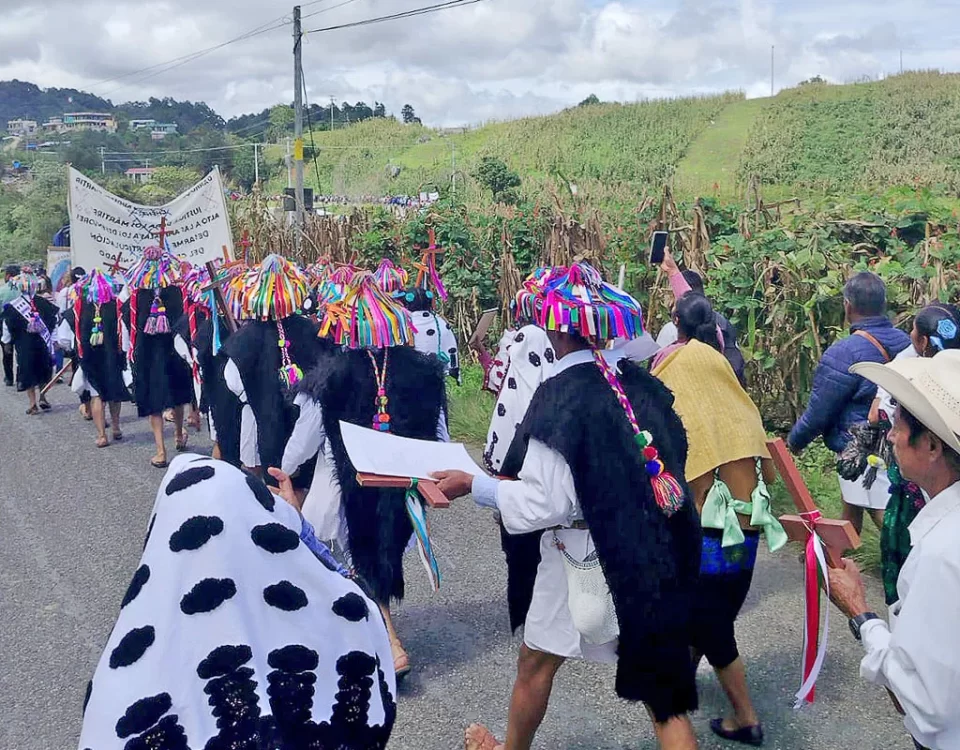
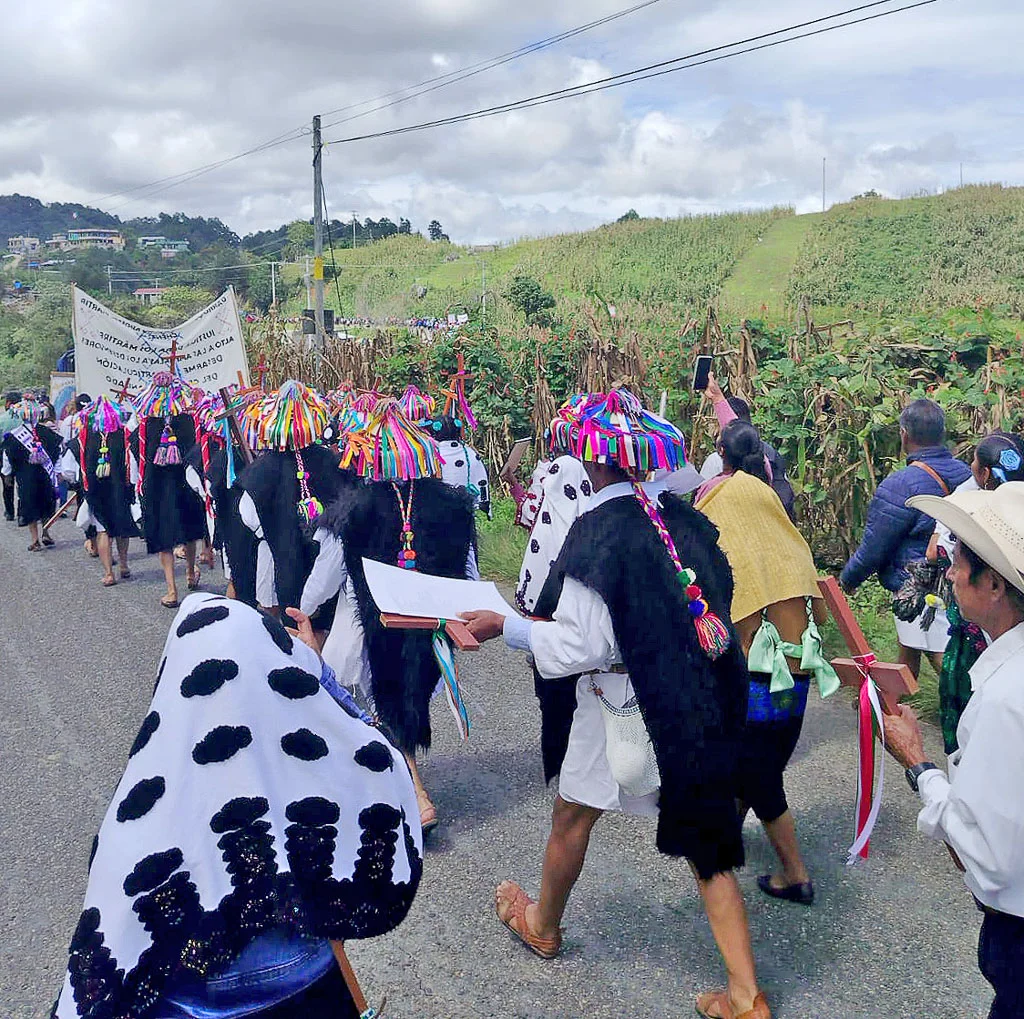
Accompanying the caravan “The South Resists”, coordinated by the National Indigenous Congress (CNI), May 2023 © SIPAZ
SIPAZ has its roots in the year following the uprising of the EZLN (Zapatista Army of National Liberation), which began on January 1st, 1994. This event opened the world’s eyes to the plight of the indigenous peoples of Chiapas, a reality marked by profound social, economic, and political inequality, and by decades of marginalization, dispossession, and human rights violations.
It was in this context that, in 1995, international organizations with experience in peace, human rights, and nonviolence joined together to respond to the need for a permanent international presence in Chiapas, aimed at preventing tensions from escalating into even greater violence. This coalition formally gave rise to SIPAZ.
From its inception, SIPAZ defined itself as an international, nonviolent, and politically independent organization. Its mission has been clear: to deter and prevent sociopolitical violence, as well as to promote respect for human rights and peacebuilding.
Through accompaniment, information dissemination, workshops, and strengthening ties with local, national, and international organizations, SIPAZ has fostered capacity building for the nonviolent transformation of conflicts and the peaceful defense of human rights. This work has taken deep root and remains in the hands of community leaders, women, youth, and human rights defenders.
Lessons from Three Decades on the Path
During these 30 years, SIPAZ has experienced challenging moments; it has learned, adapted, and sought diverse ways to address complex contexts for nonviolent work, the pursuit of justice, and peacebuilding.
Initially, several actors questioned SIPAZ for its accompaniment in a context marked by the presence of an armed group. Others questioned its nonviolent approach, considering it a potential challenge to the EZLN. It is important to note that SIPAZ’s initial stance was one of complete political independence, committed to opening spaces for dialogue that would unlock the agenda and address the structural causes of the armed conflict. Likewise, after the ceasefire that occurred twelve days after the uprising, the EZLN deployed essentially nonviolent strategies. These are the actions that SIPAZ has supported.
International accompaniment organizations typically focus their work on human rights defenders and social leaders working for peace. In the case of SIPAZ, the attacks and threats impacted entire communities, so a different, more comprehensive model of observation and presence was developed, with a psychosocial focus.
From the San Andres dialogues, through the Acteal Massacre, and up to the outbreak of criminal violence, SIPAZ has sought the opening that allows it to continue supporting community processes and keep alive the search for light amidst the chaos, a light it has always found in the hope of the people and their strength in struggle.

Analysis at the Meeting for the Defense of Mother Earth, September 2017 © SIPAZ
“SIPAZ has sought the opening that allows it to continue supporting community processes and keep alive the search for light amidst the chaos, a light it has always found in the hope of the people and their strength in struggle.”
One of SIPAZ’s most significant lessons in its early years was the need to move beyond the traditional international accompaniment model, generally very focused on protection, in order to better respond to the specificities of the context and fully take advantage of existing opportunities. In the 1990s, beyond the realm of negotiations and in response to the impacts of Low-Intensity Warfare (LIW), SIPAZ focused on limiting direct violence in so-called secondary community conflicts and transforming the context of cultural violence that could sustain them. This was achieved through work with intermediary actors (track 2, as well as grassroots actors, within the framework of the multi-track strategy), through its peace education and interfaith work.
Subsequently, hotspots multiplied in other parts of the country (for example, Atenco and Oaxaca), primarily in territories where autonomy movements similar to that of the EZLN were being promoted. These movements were systematically repressed (presumably to prevent the phenomenon from spreading nationwide). Given this scenario, SIPAZ decided to establish a presence in the states of Oaxaca and Guerrero, taking into account the similarities between these states and Chiapas in terms of poverty and the marginalization of the most vulnerable sectors of society.

SIPAZ 30 years: Community outreach at the event for the freedom of Alberto Patishtán. El Bosque, March 2017 © SIPAZ
In general, SIPAZ’s primary role has been that of observer and narrator: collecting testimonies, documenting human rights violations, monitoring and producing information through its blog, as well as through reports and analyses that, on occasion, open spaces for dialogue with national and international authorities. In recent years, maintaining a channel of communication with local and state authorities has been difficult, so we have begun to focus more on dialogue with international actors to raise awareness of the violence and human rights violations in Chiapas and to enable them to influence changes in the current situation (a “boomerang” effect).
In this way, we also work to generate historical memory, which can contribute to accountability and the mobilization of national and international civil society in the future.
In SIPAZ’s thirty years of work, we have learned and maintain that international accompaniment can contribute to building peace from the ground up, without impositions, always respecting the dignity, struggles, and perspectives of the diverse realities of the people. In this sense, topics such as migration or the defense of Mother Earth have begun to be addressed, which have become central to various defense strategies for the people.
Challenges Through the Years
SIPAZ has sought to evolve in response to the changing contexts it has been monitoring. Forms of violence have diversified. In addition to historical conflicts, new dynamics have emerged related to organized crime, land dispossession, militarization, and impunity. Our history also reflects the persistent challenges facing Mexico: inequality, structural and common violence, corruption, and impunity.

Accompaniment to the event “The Isthmus is Ours” in Oaxaca © SIPAZ
Significantly, from 2006 onward, while there was increasing talk of “war in Mexico,” both within and outside the country, the reference was no longer to the unresolved armed conflict in Chiapas, but rather to the bloody consequences of the violence that prevailed after Felipe Calderon’s declaration of war on drug trafficking at the beginning of his term. This strategy, coupled with an intense militarization of the entire country, extended not only territorially but also to all spheres of society. Likewise, a logic of criminalization and marginalization was imposed not only on the EZLN, but also on social protest and human rights defenders in general.
Contrary to expectations, President Andres Manuel Lopez Obrador (AMLO) distanced himself from organized civil society with public statements that delegitimized and discredited it, reinforcing the already extreme vulnerability of human rights defenders in the country. The tendency of those in power to discredit any voice expressing dissent and the growing absence of checks and balances also became a cause for concern. A security vision centered on a militarized perspective was maintained. The creation of a National Guard continued the past policy of confronting the growing omnipresence of organized crime through militarization, unfortunately without a significant improvement in the statistics related to violence. Furthermore, a development proposal was implemented that prioritized megaprojects, many of them extractive. Their “First the Poor” approach maintained a paternalistic approach, failing to question the structures that perpetuate the impoverishment of the population. This was even worse in Indigenous areas, where aid was distributed via bank cards and on an individual basis, generating even greater division within ejidos and rural communities. Finally, a tendency to simulate consultation processes on decisions already made, without respecting the rights of Indigenous peoples in this matter, was denounced.
Locally, a new and heavy militarization of the Southern Border was observed, under pressure from US President Donald Trump, in the context of the migrant caravans. A further closure of the Southern Border (which was already extremely porous) led to the search for new routes (a previously little-used central corridor), both for migrant trafficking and for other goods, exacerbating the growing violence. This fact played a role in the multiplication and intensification of violent acts that responded to “turf heat” in some areas that remained controlled or silenced, as well as to an open-turf war, mainly between the Sinaloa Cartel and the Jalisco New Generation Cartel, on the border strip.
Current Challenges
In contrast to the denial or minimization of what was happening at the federal level under AMLO and the inaction or possible complicity of the state government headed by Rutilio Escandon Cadenas, a change was perceived after Eduardo Ramíiez Aguilar took office as state governor in December 2024. However, El Obse, in its Second Report, covering January to July 2025, documented that, “despite official pronouncements about improvements in security, violence—including disappearances, forced recruitment, and displacement—persists in many communities, keeping human rights defenders at constant risk. Those working in documentation, visibility, and protection face adverse conditions that hinder their work and increase their exposure to attacks.”
For its part, the “Chiapas 2025 Report: Pending Peace” by the Border Region Working Group questions the militarized pacification approach adopted by the Chiapas government in response to violence perpetrated by organized crime groups. The report states that, “despite official rhetoric about conflict reduction, security strategies have deepened militarization and the presence of elite forces such as the FRIP [Pakales Immediate Reaction Forces], further straining the social fabric of communities and increasing cases of arbitrary deprivation of liberty and unrecognized displacement.” This situation complicates the work of international observers, as it entails security risks for observers, activists, and migrants traveling through the region.

Oaxaca © SIPAZ
In this regard, the violence generated by the dispute between criminal groups on the border with Guatemala not only impacts local populations but also hinders the safe work of international organizations and observers. “The presence of militarized security forces and armed groups creates an environment of insecurity that limits access, mobility, and the collection of reliable information, exposing external actors to physical and legal risks,” the same report states.
The marked differences between official narratives, which promote an image of “restored peace,” and those documented by the Observatory of Social and Economic Integrity (OBSE) and organizations that record persistent acts of violence, complicate the dissemination and impact of the documented information. This is compounded by the emergence of silenced zones (where people choose not to report or publish for fear of reprisals). This leads to critical information being minimized or delegitimized by authorities who prioritize narratives of order and control.
The challenges of international accompaniment in Chiapas today, “in a context of persistent violence, militarization, complex human mobility, and political tensions,” require new strategies. These efforts must ensure the safety of both those providing support and those being supported, defend human rights, and document and raise awareness of human rights violations. They must also foster collaboration among organizations and cooperation with other international bodies, all while strengthening local capacities for organization and protection against systematic violations. International work is not only urgent but essential to highlighting realities that often remain outside official narratives and to continue supporting the most vulnerable communities in protecting their fundamental rights.

Workshop with seminarians from the Diocese of San Cristóbal de las Casas (2022-2023) © SIPAZ
Perspectives for the Future: Between Memory, Hope, and Action
Looking ahead on this 30th anniversary is both a challenge and an opportunity to reaffirm and update our mission, renew our commitments, and build new paths to peace.
-
Reaffirming the Commitment to True Peace
Strengthening training and information work for peace. SIPAZ considers it essential to consolidate processes that not only prevent violence but also promote the construction of true peace based on justice.
-
Innovate Accompaniment Strategies
Faced with new forms of violence, it is necessary to explore new models of accompaniment: combining physical and digital support, remote monitoring, strengthening community networks and partnerships, as well as documentation and reporting.
-
Historical Memory

Accompanying the Mothers in Resistance collective in meetings with the state government and prosecutor’s office, Tuxtla Gutiérrez, September 2025 © SIPAZ
SIPAZ will continue to collect testimonies and conduct reflections and analyses. It will continue to nurture memory, convinced that this archive can be a pedagogical resource for new generations, researchers, activists, and for community reconciliation processes.
-
Advocacy/Diplomacy for Peace
At a time when many rights are under pressure, SIPAZ will maintain its role as an advocacy player: making violations visible and denouncing them, and collaborating with organizations, international bodies, and human rights mechanisms.
-
Strengthening the protection of human rights defenders
Designing and consolidating support schemes with a gender and risk perspective, in conjunction with legal, psychological, and community security programs for human rights defenders. It is vital that SIPAZ integrate preventive and structural protection into its long-term strategy.
-
Information and education
Continuing to contribute to making peace not a distant concept, but a daily practice. Integrating more people, including youth and women, into educational projects on peace, dialogue, and memory, and committing to directing information to broader sectors of society, also expanding dissemination channels.
Continuing on the Path
For 30 years, SIPAZ has strived to contribute to peacebuilding and to sow hope. It has offered its presence in critical moments, trained and supported local processes, built advocacy networks, and kept alive the possibility of a peace that is not merely the absence of visible violence, but a shared project of justice, reconciliation, and dignity. A true peace.

Presentation with young people, August 2023 © SIPAZ
“a peace that is not merely the absence of visible violence, but a shared project of justice, reconciliation, and dignity. “
This moment of commemoration challenges us and invites us to reflect: What does peace mean to us? How can we continue to contribute to strengthening those spaces that seek peace with justice and dignity? The path of peacebuilding is a long one, full of tensions and challenges, but also of learning, encounters, and hope.
As long as we are able, our commitment will remain to be present where dignity is threatened, where silence hurts, where violence lurks, and where hope needs allies to keep that light alive. Because peace is not a destination, but a shared journey.
A journey built step by step, shoulder to shoulder, heart to heart.
And if these three decades have taught us anything, it’s that even in territories where violence seems to prevail, there are always those who believe in the possibility of a different world, a world for everyone, and they work for it. It is there that we continue to find, and will continue to find, the strength and the motivation to carry on, because we believe that this is a path worth following.

Accompanying the Mothers in Resistance collective in meetings with the state government and prosecutor’s office, Tuxtla Gutiérrez, September 2025 © SIPAZ
“… our commitment will remain to be present where dignity is threatened, where silence hurts, where violence lurks, and where hope needs allies to keep that light alive. Because peace is not a destination, but a shared journey.”

Interview with people displaced by criminal violence in Guerrero © SIPAZ
“… a peace that is not merely the absence of visible violence, but a shared project of justice, reconciliation, and dignity.
A journey built step by step, shoulder to shoulder, heart to heart.”.”