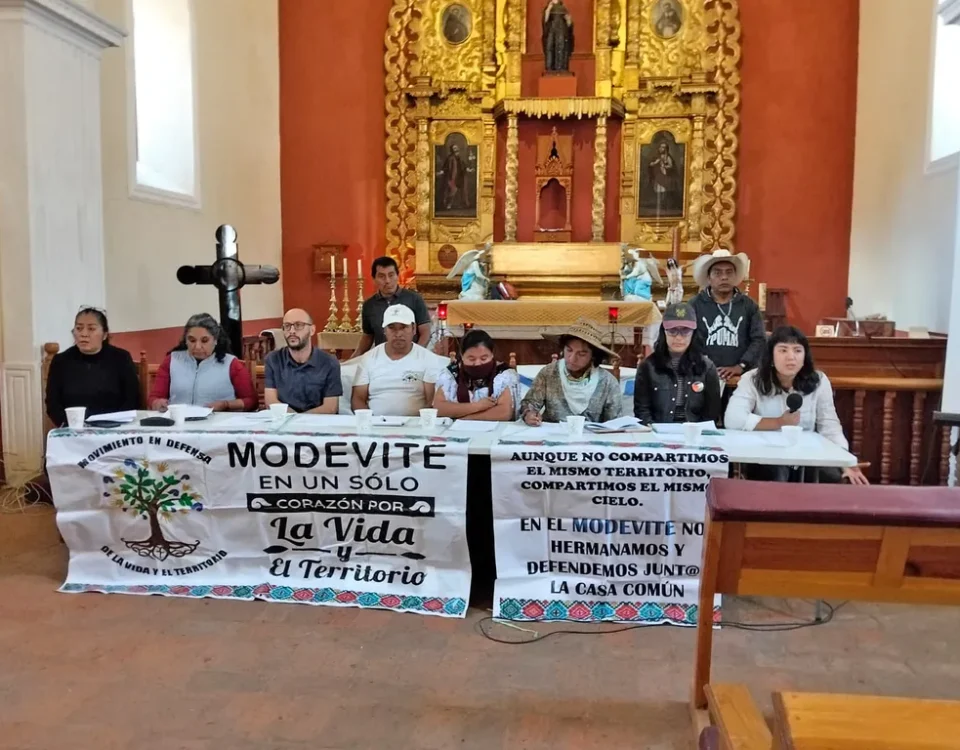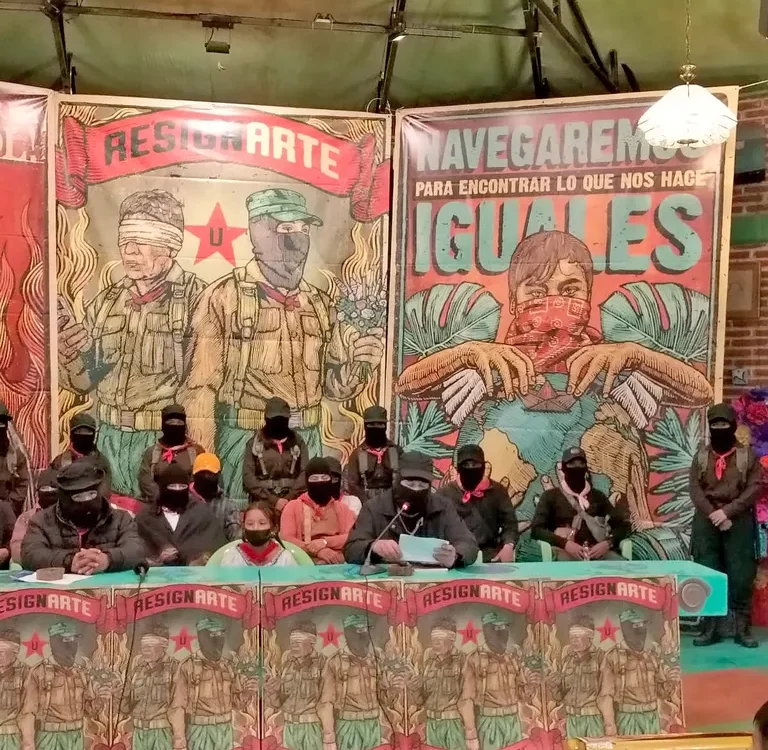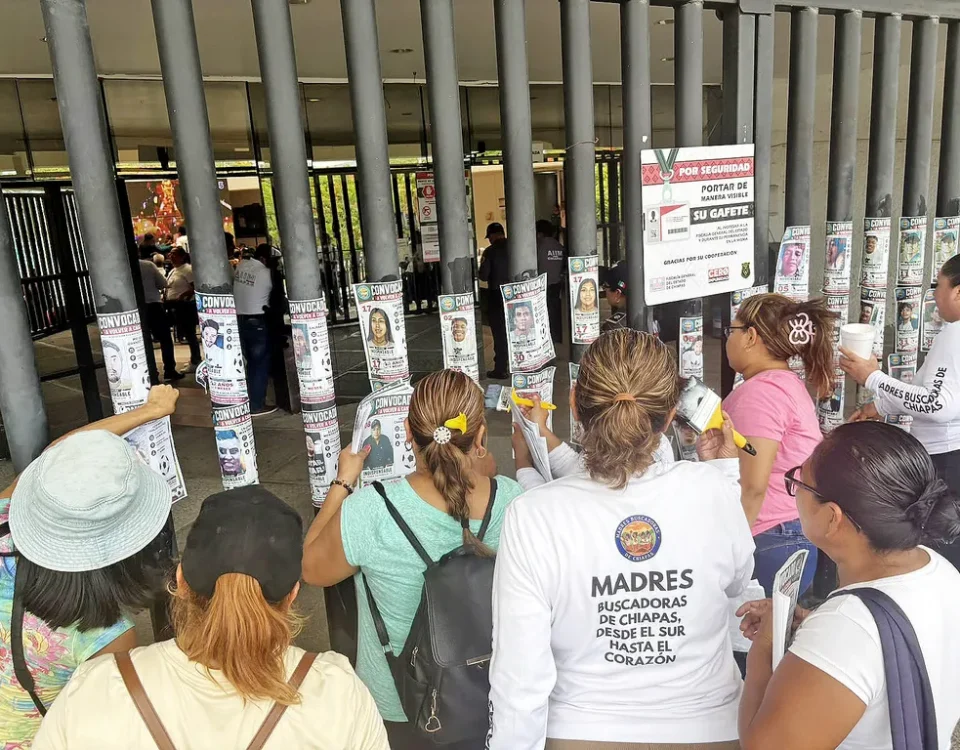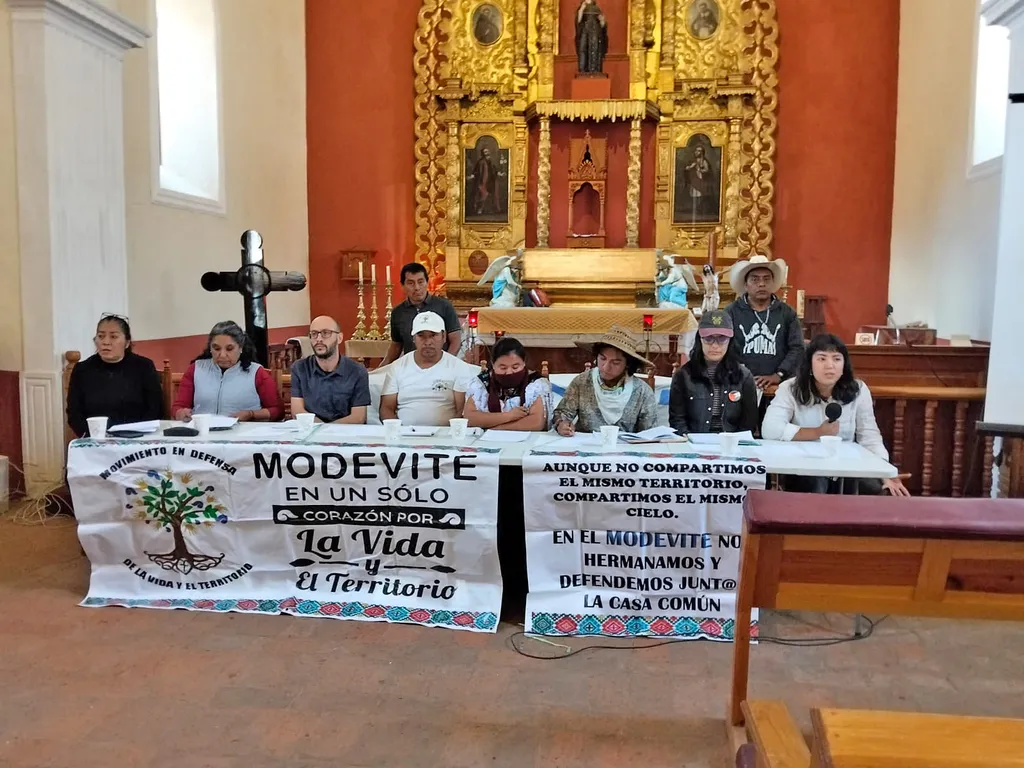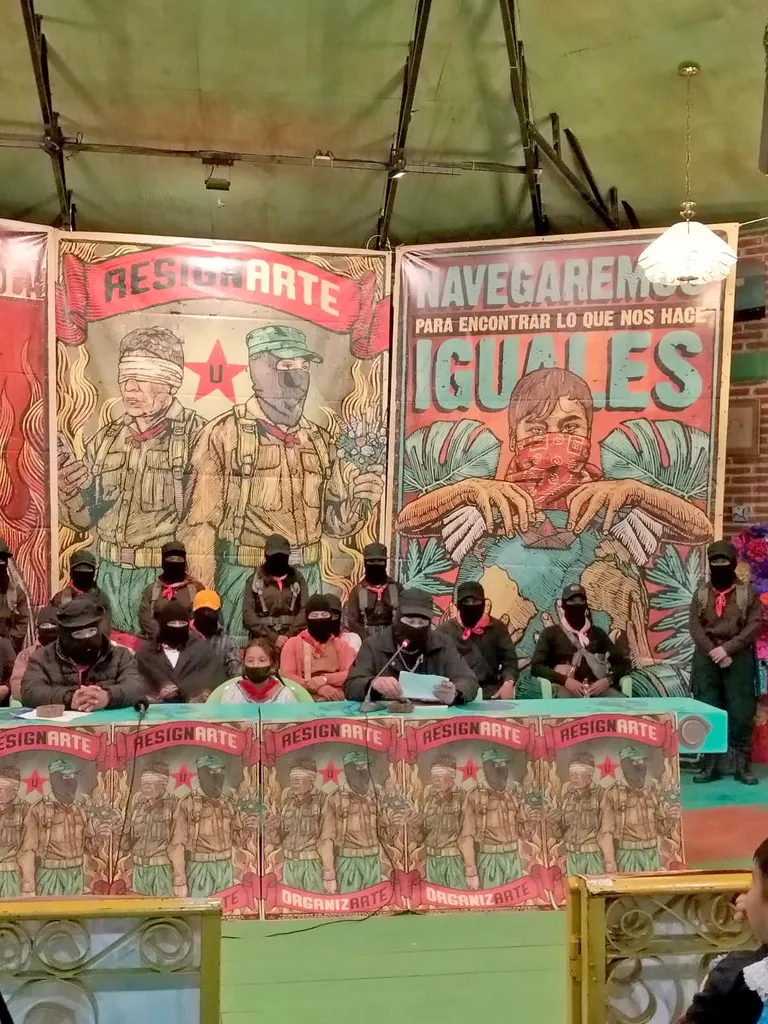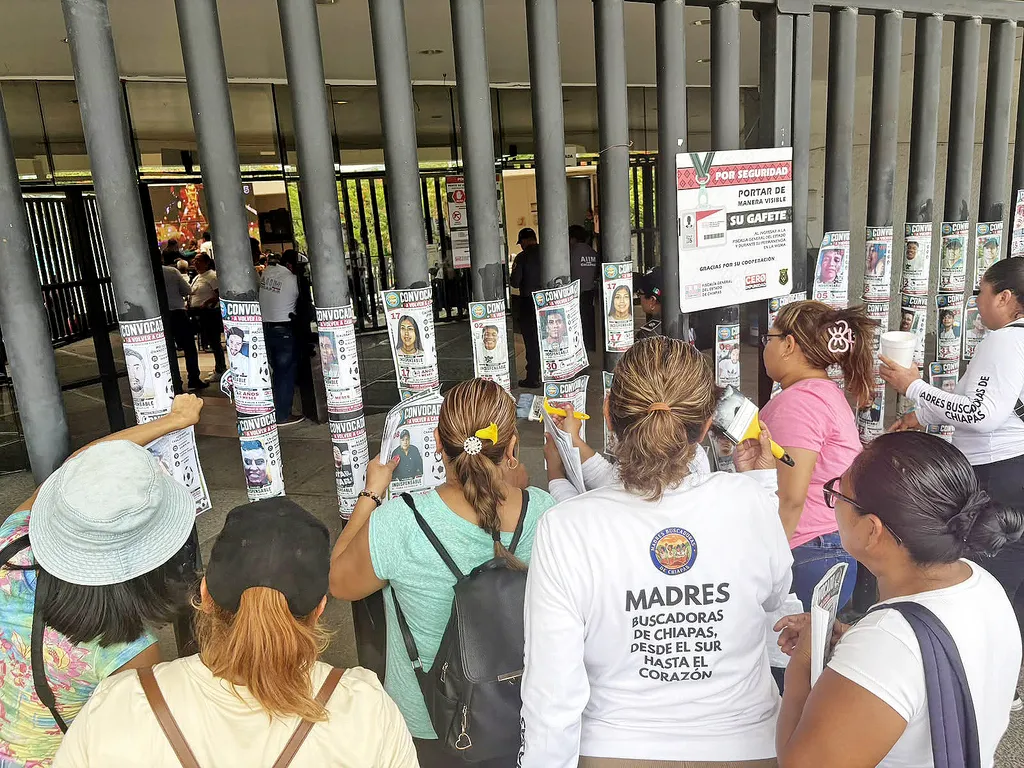
FOCUS: The Struggle for Autonomy Among Indigenous and Afro-Mexican Peoples. Between the recognition of rights and autonomy built “from below”
17/09/2026
SIPAZ Activities (Mid-May to Mid-August 2026)
17/09/2026
S peaking of peacebuilding in Chiapas means defending human dignity, promoting justice, recognizing and respecting cultural and religious diversity, and creating spaces where differences can be addressed through dialogue and collective organization.
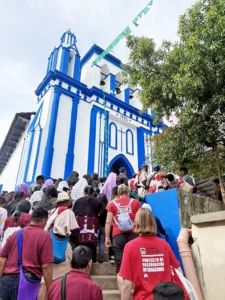
Accompanying pilgrimages © SIPAZ
In this process, ecumenism and interreligious dialogue have played a particularly important role in the state. One of the main points of reference has been the Diocese of San Cristóbal de las Casas, particularly since the arrival of Samuel Ruiz García (bishop from 1959 to 1999). Through his commitment to indigenous peoples, to an indigenous Church, and to dialogue among different religious traditions, he helped pave the way for reconciliation and social participation.
It is within this same framework that we situate the work of SIPAZ, which for 30 years has grounded its efforts in supporting social organizations, indigenous communities, human rights organizations, national and international networks, as well as religious actors.
Ecumenism as a Path to Peace
Ecumenism is often understood as the search for unity and collaboration among different Christian denominations. However, in contexts such as that of Chiapas, it is not merely a matter of finding common ground among diverse faiths, but of building shared spaces to address problems that affect society as a whole.
Faced with a reality marked by violence and divisions, faith communities can offer something different: listening to one another, acknowledging one another, and seeking what allows us to walk together. This is particularly important in Chiapas, where religious diversity intersects with the cultural diversity of Indigenous peoples.
The experience of the Diocese of San Cristóbal illustrates how faith is deeply linked to social reality. The pastoral approach of “jTatik” Samuel underwent a transformation through his contact with indigenous communities and his recognition of the marginalization and discrimination they faced. This transformation helped strengthen these communities’ organizational processes and linked their religious experience to the defense of their rights.
From this perspective, peace is built from the ground up when those who have historically been excluded can participate as active agents—and not merely as recipients—of decisions made by others.
“Peace is built from the ground up when those who have historically been excluded can participate as active agents and not merely as recipients.”
A Church That Learned to Listen
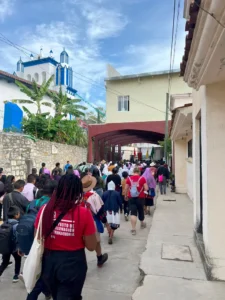
Accompanying pilgrimages © SIPAZ
One of the most important aspects of “jTatik” Samuel’s legacy was the promotion of an indigenous Church—that is, a Church capable of recognizing that indigenous peoples should not have to abandon their culture to live out their faith.
In this process, Indigenous Theology took on special importance, as it seeks to recover and recognize the millennia-old religious and spiritual experiences of indigenous peoples. It is based on a profoundly meaningful premise: Indigenous peoples possess their own spiritual experience that deserves to be heard and valued. Their relationship with Mother Earth, the pursuit of communal harmony, justice, agreements, and “Lekil kuxlejal” (good living) are elements that can engage in dialogue with the Christian tradition and enrich it.
This represented a radical shift from historical practices of religious imposition. Rather than viewing Indigenous spiritualities as obstacles to be eliminated, Indigenous Theology seeks to recognize them as a source of wisdom.
“Dialogue thus ceases to be a strategy for convincing the other and becomes an opportunity to learn from them.”
In February 1991, Chiapas hosted the “First Continental Encounter on Indigenous Theology.” Over time, these processes helped overcome some of the prejudices that had hindered the Church’s inculturation and the indigenous people’s appropriation of the Christian faith.
From Interreligious Dialogue to Peacebuilding
Ecumenism’s contribution to peace takes on an even greater dimension when linked to the defense of Mother Earth and human rights. The experience in Chiapas shows that a Church can play a social role without abandoning its spiritual identity.
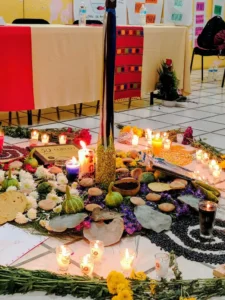
Mayan altar © SIPAZ
The Catholic Church, together with civil society organizations, has participated in mediation and dialogue processes during particularly difficult moments in Chiapas’s recent history. Following the Zapatista uprising, it played a central role as a mediator between the Zapatista Army of National Liberation (EZLN) and the federal government. This approach led it to acknowledge the inequalities that exist between the parties and to create conditions so that those who have had fewer opportunities to be heard could participate.
Here lies one of the most important contributions of ecumenism: the ability to build bridges. In polarized contexts, religious communities can offer spaces for encounters between people who would be unlikely to sit down together in other settings.
“Spirituality can become a common language centered on values such as the defense of life, justice, reconciliation, and human dignity.”
This dimension found significant international expression in 1998, when a meeting of the “Peace Council” was held in Chiapas, with the participation of prominent figures involved in peace efforts. Subsequently, SIPAZ also promoted ecumenical and interfaith gatherings in Chiapas. In 1999, at our initiative, nearly 300 religious leaders from 26 countries participated in a statement recognizing Samuel Ruiz’s 40 years of ministry. The document was endorsed by various Christian denominations and by representatives of Jewish, Muslim, and Buddhist traditions.
These events demonstrate that the Chiapas experience did not remain confined within the state’s borders. International solidarity made it possible for the communities’ conflicts and hopes to be known in other parts of the world.
SIPAZ and Ecumenism: A Shared Logic of Collaboration
The relationship between ecumenism and SIPAZ’s work can be understood through a common idea: peacebuilding requires collaboration. SIPAZ emerged from an international coalition and, from its earliest years, maintained ties with social and religious organizations. Over time, we have learned that ecumenism is not merely a religious issue, but also a way of building the social fabric. When different people and organizations are able to work together despite their differences, we strengthen our capacity to resist the various forms of violence that seek to divide us.
“Ecumenism is not merely a religious issue, but also a way to build the social fabric.”
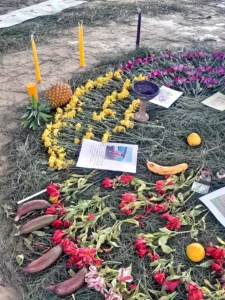
Festival for Peace and Hope organized by the Ecumenical Community Network, San Cristóbal de las Casas, August 2026 © SIPAZ
This issue takes on particular relevance in the current context. We understand that collaboration is increasingly necessary in situations where we face multiple forms of violence and where isolation can increase our vulnerability. Therefore, we have continued to support community processes, gatherings, and initiatives within the Diocese of San Cristóbal, as well as efforts related to the defense of Mother Earth and actions by various sister organizations. In recent years, Catholic and Evangelical churches have participated together in pilgrimages for peace.
Converging and Accompanying
Don Samuel promoted processes in which indigenous peoples were the protagonists of their own history and religious experience. SIPAZ, for its part, seeks to accompany without taking over local processes. Its task consists of being present, listening, documenting, coordinating, raising awareness, and strengthening the capacities of those who peacefully defend their rights.
This approach involves recognizing that communities possess their own knowledge and strategies for addressing their problems. External accompaniment should not replace them but rather contribute to expanding their scope of action.
It also involves understanding peace as a long-term process. Peacebuilding requires memory, because forgetting violations and conflicts can allow them to be repeated. It requires justice, because wounds do not simply disappear with the passage of time. It requires dialogue, because differences need spaces to be worked through. And it requires hope, because no profound social transformation is possible if people stop imagining a different future.
“No profound social transformation is possible if people stop imagining a different future.”
Spirituality as the Foundation and Driving Force of Transformation and Resistance
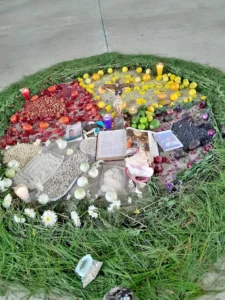
Mayan altar © SIPAZ
The experience in Chiapas demonstrates that ecumenism can be much more than a dialogue among churches. Spirituality can become a force for social transformation. The struggle and unity we have witnessed and been a part of show us that faith can transcend religious and cultural boundaries to become a common language of resistance, hope, and justice.
Peace is not a destination but a collective journey. A journey that requires presence, dialogue, memory, justice, and solidarity. A journey on which no one should seek to walk above others, but rather side by side. Peace is built when people regain their voice, when communities can decide their own future, when religious differences cease to be a source of confrontation, when cultural diversity is recognized as a source of richness, and when solidarity replaces isolation.
“Peace is not a destination, but a collective journey.”
In this endeavor, SIPAZ remains committed to accompanying those who, guided by their spirituality or convictions, are dedicated to building true peace in Chiapas.