
SIPAZ Activities (Mid-May to mid-August 2025)
09/09/20252025
07/01/20262025
January 1: EZLN celebrates 31st anniversary of armed uprising.
January 5: the interim mayor of Frontera Comalapa is arrested.
January 8: Federal Authorities present their ‘’Peace Building in Chiapas’’ Strategy during an event in San Cristóbal de las Casas.
January 12: Pilgrimage in Chenalhó demands justice for the murder of Padre Marcelo.
January 14: REDIAS condemns the murder of adolescent and youth in the North of San Cristobal de Las Casas.
January 19: An operation of Federal and State Forces is carried out in the North of San Cristobal de Las Casas.
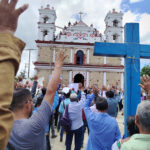
January 25: thousands of Catholics make a pilgrimage to demand, among other things, the disarmament and dismantling of criminal groups in Chiapas and justice for the murder of Father Marcelo Perez. They ask that there be no “media simulation” of peace.
January 26: approximately 2,000 migrants leave Tapachula in a caravan headed to Mexico City to eventually cross the border into the United States.
February 17: Melel Xojobal speak out against the increasing violence towards girls, boys and adolescents in San Cristóbal.
February 28: Indigenous catechist and evangelical are sentenced for the disappearance of 21 people from Pantelho.
March 7: the Observatory of Attacks on Human Rights Defenders in Chiapas, “El Obse” is launched.
March 8: thousands of women march to denounce gender violence and femicides in the framework of the 8M.
March 15: Governor presents a report on 100 Days of his government.
March 19: Frayba publishes its annual report, entitled “Chiapas, in the Spiral of Armed and Criminal Violence”.
March 22: CNI and EZLN publish a letter condemning the criminalization of searching families.
March 23: the Ocosingo-Palenque highway construction is approved in ‘’public consultation”.
March 31: members of the Movement in Defense of Life and Territory (MODEVITE) and the Community Government of the municipality of Chilon express their opposition to the construction of the San Cristobal-Palenque superhighway, as well as to the popular consultations held in several municipalities that will be affected by the project.
April 9: Luis Manuel Lopez Alfaro is named new bishop of Tapachula.
April 13 to 19: the Art, Rebellion, and Resistance Encounter convened by the EZLN takes place.
April 24: security forces and soldiers detain two Zapatista Support Bases in Aldama.
April 26: a pilgrimage is held in Chalchihuitan demanding closure of bars and halt to sale of drugs.
May 2: after several national and international protests and mobilizations, two Indigenous support bases of the EZLN from Aldama are released.
May 22: In commemoration of the first anniversary of the massacre of 11 people in the Nuevo Morelia ejido in Chicomuselo, a pilgrimage is held with than a thousand members of the Diocese of San Cristóbal.
May 22: “We Are Living in a Violent Normality Disguised as Peace”, claim Las Abejas.
June 2: Criminal group ambushes and kills five state police officers in Frontera Comalapa.
June 8: Clash at Frontera Comalapa – Operation against criminal groups spreads to Guatemala, leaving four dead.
June 8: Eduardo Ramirez, governor of the state, presides over the inauguration of the Palenque-Ocosingo highway construction.
June 9: The United Nations (UN) Working Group on Arbitrary Detention call on the Mexican government to immediately release five indigenous activists from San Juan Cancuc, sentenced to 25 years in prison in Chiapas.
June 10: discrediting and possible legal action against Patricia Aracil, coordinator of the Cereza Collective is denounced.
June 10: Las Abejas and social organizations denounce growing violence in Tzajalchen, in the municipality of Chenalhó.
June 13: The Movement in Defense of Life and Territory (MODEVITE), the community government of Chilon, and various localities in the area demand once again the cancellation of the construction of the Palenque-Occosingo highway.
June 23: he state governor, Eduardo Ramirez, introduces the State Guard, which will replace the State Police.
July 13: The National Indigenous Congress (CNI) of Tila denounces being subjected to harassment, threats, aggression and arbitrary detentions, as well as slander and defamation, by different levels of government, in complicity with the Karma organization.
July 12: the legal director of Chiapas Attorney General’s office is arrested for alleged kidnapping and extortion.
July 13: the suspension to the construction of the San Cristobal de Las Casas – Palenque highway requested by indigenous communities is denied.
July 21: Photojournalist Luz del Alba Velasco Gordillo reports that her home was illegally raided on July 12 by members of the Chiapas State Attorney General’s Office (FGE), with the support of the military and the National Guard.
July 22: the burglary of the home of Dora Roblero, Frayba Director, in San Cristóbal de las Casas is denounced.
July 25-27: The “International Meeting in Defense of Life: Corn, Water, Territory and Mother Earth” takes place in the municipality of Chilón.
August 3-17: The EZLN holds the international meeting “Resistances and rebellions: Some parts of the whole” in the Caracol of Morelia.
August 9: more than 3,000 people hold a pilgrimage to the Bachajon ejido (common land) in the municipality of Chilon to demonstrate their opposition to the construction of the San Cristobal-Palenque highway.
August 13: Frayba takes a stand against the 20-year prison sentence handed down to the “material author” of the extrajudicial execution of Father Marcelo Perez, “maintaining the injustice through an institutional strategy that obscures the truth”.
August 15: residents of at least six municipalities in the Chol indigenous region of Chiapas hold a pilgrimage for peace in Palenque.
August 19: the Guatemalan government reports that it has granted humanitarian stay permits to 161 Mexican citizens who crossed the border from Chiapas seeking refuge from violence caused by organized crime groups. The governor of Chiapas, Eduardo Ramirez, denies that forced displacements due to organized crime exist in the state, stating that these reports are part of an attempt to discredit the state’s security strategy.
August 24: hundreds of Catholics from the parish of Saint Bartholomew the Apostle in the Diocese of San Cristobal de Las Casas hold a pilgrimage for peace in Venustiano Carranza.
August 30: Several actions are carried out within the framework of the International Day of the Victims of Disappearances.
September 6t: two years after its founding, the Selva Negra Human Rights Center issues a strong statement denouncing serious human rights setbacks in Chiapas
September 8: Dozens of journalists from Chiapas demonstrate in front of the State Congress to demand the resignation of Horacio Culebro Borrayas, current president of the State Human Rights Commission (CEDH), accusing him of being responsible for a smear campaign against Mary José Díaz Flores, a journalist who reported on alleged acts of corruption, the purchase of items at inflated prices, arbitrary discounts, and salary withholdings from employees of the organization.
September 10: the president of Tila ejido commission is murdered.
September 13 and 14: in San Cristobal de las Casas, Chiapas, a regional meeting is held that brought together more than 30 ejidos (common lands), communities, and organizations from Oaxaca, Guerrero, and Chiapas to discuss megaprojects in Indigenous territories.
September 30: Frayba reports on “the strategies of encirclement and dispossession of the territory recovered through the struggle of the Zapatista Army of National Liberation (EZLN), carried out in the Zapatista Autonomous Village of Belen, Campesino Region, belonging to Caracol 8, ‘The Light that Shines to the World,’ based in the Dolores Hidalgo community (official municipality of Ocosingo, Chiapas).”
October 1: In San Cristóbal de Las Casas, more than one hundred people demonstrate in defense of the safety and human rights of the members of the Global Sumud Flotilla, which was attempting to deliver humanitarian aid to Gaza. They denounce the presence of a group of heavily armed police officers behaving in a threatening manner.
October 2: Students from the Jacinto Canek Intercultural Bilingual Indigenous Normal School report being attacked by municipal police officers in San Cristóbal during their march commemorating the Tlatelolco massacre.
October 5 and 6: Members of several communities in the Zoque region march in defense of their lands and territory amid fears that mining exploitation will resume in the region.
October 9: A plaque bearing the name of Antonio González Méndez, an indigenous Chol man, is unveiled in San Cristóbal de Las Casas. He was a supporter of the EZLN and disappeared in the municipality of Sabanilla in 1999. This was done in compliance with a ruling by the Inter-American Court of Human Rights (IACHR).
October 9: The collective Madres en Resistencia (Mothers in Resistance) and the Chiapas State Attorney General’s Office reach agreements to strengthen search efforts aimed at locating their disappeared relatives, as well as to guarantee legal justice against those responsible for the femicides of their daughters, sisters, and other loved ones.
October 20: thousands of people from different municipalities in Chiapas make a pilgrimage to San Andres Larrainzar to commemorate the first anniversary of the murder of Tsotsil priest Marcelo Perez and continue to demand justice.
October 21: In Chicomuselo, the governor of Chiapas, Eduardo Ramírez Aguilar, participates in the Third March for Peace, which was attended by more than 5,000 residents who witnessed the tribute and unveiling of the bust in honor of Professor José Artemio López Aguilar, who was murdered in 2023, after participating in a March for Peace.
October 22: Hector “N,” alias “El Chesman,” the alleged leader of the criminal group known as “Los Motonetos,” accused of participating in the murder of Tsotsil priest Marcelo Perez is arrested.
October 27: representatives of the Platform for Peacebuilding in Mexico denounce the discrepancy between the official discourse on “peace” and the reality in Chiapas and throughout the country.
October 31: El Obse releases a report documenting 79 attacks against human rights defenders and journalists that occurred during the first half of 2025.
November 1st: On the Day of the Dead, the Melel Xojobal organization promotes the public action “Impunity for Death” to denounce the deaths of children and adolescents who should not have died due to violence, negligence and impunity in Chiapas (79 of them by that date so far this year).
November 6: In Tuxtla Gutiérrez, Chiapas, an international delegation made up of members of the European Parliament and several European organizations urges Mexico to comply with multiple outstanding human rights issues.
November 13: On the 19th anniversary of the Viejo Velasco massacre, relatives of victims and organizations continue to demand justice.
November 14 to 16: women’s groups and organizations from four regions of Chiapas hold the VIII Assembly of the Women’s Movement in Defense of Mother Earth and Our Territories in Salto de Agua
November 21: The five indigenous Tseltal defenders from San Juan Cancuc, imprisoned for more than three years and sentenced to 25 years in prison, are released.
November 22: Yerli Yaritza, a young woman, is found dead in her home in Ocosingo. She was a member of the Madres Buscadoras de Chiapas collective (Searching Mothers of Chiapas), searching for her father, Hamilton Pérez Coutiño, who disappeared in April 2024.
November 24 and 25: A series of activities are carried out within the framework of the 12th anniversary of the Movement in Defense of Life and Territory (MODEVITE), in San Juan Cancuc, within which it reiterates its rejection of the San Cristóbal–Palenque highway project and demands that the extractive megaprojects be stopped throughout the Mayan, Zoque and Chol territory.
November 25: As part of the International Day for the Elimination of Violence against Women, around 800 members of the Diocesan Coordinator of Women (CODIMUJ) make a pilgrimage in San Cristóbal de Las Casas to demand an end to violence against them.
November 30: Violent acts occur in Villaflores after armed civilian groups set fire to four vehicles, causing road blockades and armed clashes between groups allegedly linked to organized crime.
December 5: Pedro Cortes Lopez and Diego Mendoza Cruz, two Tseltal Indigenous men from Pantelho who had been sentenced to 110 years in prison for the alleged forced disappearance of 19 people , are released
December 7: the governor of Chiapas, Eduardo Ramirez Aguilar, presents his First Government report and affirms that in just one year his administration had achieved progress that many considered impossible: restoring peace, the rule of law, and good governance in a state that had been mired in a wave of violence fueled by disputes between organized crime groups.
December 13: the Border Region Working Group publishes the preliminary report “Chiapas 2025: The Pending Peace” denouncing “the persistence of violence, disappearances, forced displacement, and the lack of reliable official data render victims invisible and hinder the development of effective public policies, leaving border communities in a scenario of fear, uncertainty, and institutional abandonment”.
December 14: the body of a 60-year-old woman, identified as Natividad, is found in the municipality of Tila, raising the number of victims of possible femicides to 31 so far this year.
December 21: Believing People in Chicomuselo denounce continued violence.
December 22: Commemoration of the 28th anniversary of the Acteal massacre.
December 26-30: The EZLN holds the “Of Pyramids, Histories, Loves and, of course, Heartbreaks” Encounter in San Cristóbal de las Casas.