LATEST: Mexico Faces Multiple International Challenges: Pressure, Sovereignty, Cooperation, and Multilateralism
17/09/2026
ARTICLE: Faith, Engagement, and Peacebuilding: 30 Years of Learning and Commitment Rooted in Spirituality
17/09/2026
O n August 7, the consultation process for the General Law on the Rights of Indigenous and Afro-Mexican Peoples began amid conflicting positions.
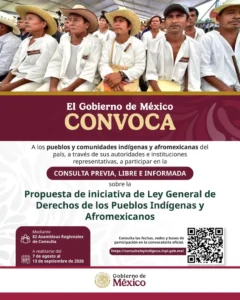
Consult © Government of Mexico
While the Mexican government—and, in particular, the National Institute of Indigenous Peoples (INPI)—maintains that the process aims to ensure the direct participation of communities in drafting the new legislation, various indigenous peoples and organizations question the way it is being carried out and believe that there has not been sufficiently broad deliberation.
It is worth recalling that the constitutional amendment to Article 2, published in September 2024, recognized Indigenous and Afro-Mexican people and communities as subjects of public law, with legal personality and their own assets, in addition to expanding the recognition of autonomy, self-determination, and other rights. Furthermore, it established Congress’s obligation to enact a general law to give effect to those rights.
In March 2026, the organization FUNDAR acknowledged that the amendment to Article 2 represented “progress in the formal recognition of the rights of indigenous and Afro-Mexican people,” but noted that the Congress of the Union had committed “a legislative omission by failing to enact said law within 180 days of the Decree’s publication.” It argued that “as the Alliance for Self-Determination and Autonomy has stated on various occasions, this inaction by the Legislative Branch does not constitute a neutral legal vacuum, but rather a violation of fundamental rights, as it hinders their regulatory development and, consequently, their effective enforceability; furthermore, it perpetuates the existing regulatory fragmentation.” It urged “closing the gap between constitutional recognition and the material reality of these rights. (…) The enactment of this law should not be understood as a concession, but rather as the fulfillment of an urgent legal and historical obligation.”
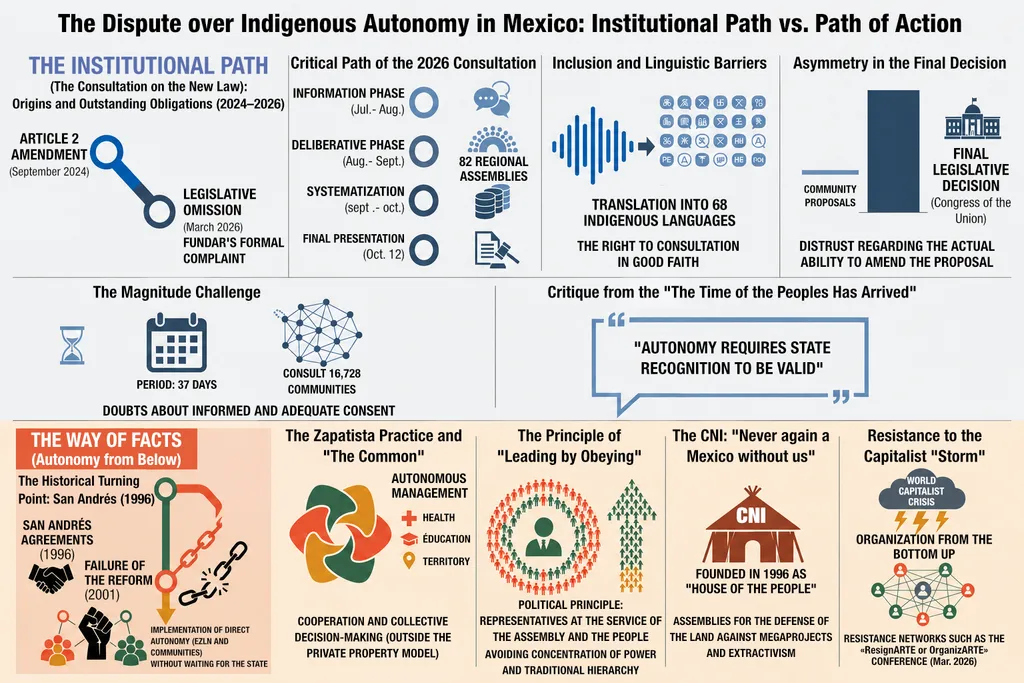
In late June, Mexican President Claudia Sheinbaum Pardo signed the call to put the proposal to a referendum, declaring that “for the first time in the history of independent Mexico, there is full recognition of the rights of the people.” The proposed timeline calls for an informational phase from July 1 to August 6, followed by a deliberative phase from August 7 to September 13, which will include 82 regional assemblies and seven working groups in various cities across the country. Subsequently, between September 21 and October 11, proposals emerging from the communities will be incorporated to present the final initiative to Congress on October 12—a date the government has designated as the Day of the Multicultural Nation and Indigenous Resistance.
Arguments in Favor of the Consultation
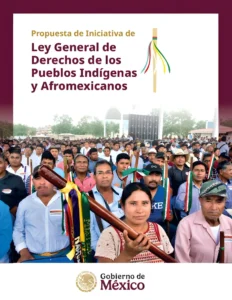
Proposal © Government of Mexico
The head of the INPI, Adelfo Regino Montes, has stated that the consultation seeks to change the traditional way in which laws are drafted by government offices and specialists, giving indigenous and Afro-Mexican communities a central role. The consultation itself constitutes recognition of a collective right of indigenous and Afro-Mexican communities: the right to be consulted on legislative measures that may affect them. Furthermore, the official protocol stipulates that the consultation must be prior, free, and informed, and the structure of the process will incorporate principles such as good faith, full and effective participation, an intercultural perspective, substantive equality, transparency, and the duty to accommodate—rights established in various international conventions and treaties already ratified by Mexico.
A second positive argument is the territorial and cultural scope of the process. The consultation is not limited to national organizations or political representatives but aims to reach thousands of communities. The fact that the bill is being translated into the 68 indigenous languages recognized in the country seeks to reduce one of the main barriers to participation: that legal information is available exclusively in Spanish. Furthermore, the process is based on a proposal that was already developed through previous participatory mechanisms.
A third argument in favor is the potential content of the new law. The results of previous participatory processes have raised issues such as the recognition of indigenous peoples as subjects of public law, a horizontal relationship with the State, legal pluralism, autonomy, the comprehensive reconstitution of indigenous peoples, and specific measures against racism and discrimination. Ideally, the consultation could help ensure that the law is not merely a declaratory provision. Its value would lie in specifying how rights are actually exercised: who administers resources, how community legal personality is recognized, how indigenous peoples participate in public decision-making, how indigenous legal systems are coordinated with the national legal system, and what specific obligations the various levels of government will have.
“Ideally, the consultation could help ensure that the law is not merely a declaratory provision. Its value would lie in clarifying how rights are actually exercised.”
Arguments Against and Main Risks
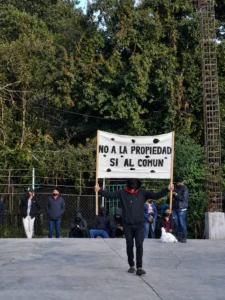
Theater production “Zapatista Encounter” in San Cristóbal de las Casas, August 2026 © SIPAZ
However, indigenous and Afro-Mexican communities have expressed their opposition to the process. They point out that the established timelines do not align with their traditional forms of deliberation and that they seem to respond more to political and legislative interests than to the needs of the people.
They do not necessarily question the existence of the consultation, but rather the way it is designed and, above all, its actual capacity to modify the bill in its current form. The consultation allows communities to present opinions, proposals, and objections, but the final legislative decision rests with the Congress of the Union. This is a significant imbalance: communities can participate in shaping the bill, but they have no guarantee that their proposals will be incorporated into the final text.
“The consultation allows the people to present their opinions, proposals, and objections, but the final legislative decision rests with the Congress of the Union.”
The true scope of the reform will depend on secondary legislation, budgets, the responsible institutions, and the communities’ ability to exercise their new rights. Recognizing indigenous peoples as subjects of public law entails a profound change in the relationship between them and the federal, state, and municipal governments. It also raises complex issues regarding public resources, administrative coordination, regulatory systems, and jurisdiction. Therefore, the process should be analyzed on two levels. The first is the quality of the consultation: whether it was conducted in advance, freely, with full information, in a culturally appropriate manner, and in good faith. The second is what happens after the consultation: how proposals are systematized, which ones are incorporated, which ones are rejected, and for what reasons.
Mixtec attorney Francisco López Bárcenas wrote in *La Jornada*: “This is not, as is so often insisted, a consultation on a specific bill, but rather a proposal that could become one—though it could also become something else, or nothing at all, if the consultation were truly that; but as is evident, the true objective of the process—as it is called—is to legitimize a legislative initiative in line with the welfare policies promoted by the current government, yet far removed from the legal framework needed to address the problems afflicting indigenous peoples due to their inability to exercise their rights.”
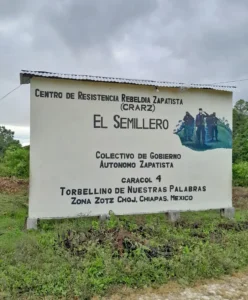
Center for Zapatista Resistance and Rebellion (CRARZ, new structures of the EZLN) © SIPAZ
A second risk is the scale and complexity of the process. Consulting 16,728 communities and an enormous diversity of peoples and regions in 37 days poses a considerable logistical challenge. The communities have very different economic, geographic, linguistic, and political conditions. The existence of regional assemblies and working groups may encourage participation, but there is also a risk that communities with greater organizational capacity or greater access to information will exert disproportionate influence. Furthermore, translating a legal initiative into indigenous languages is essential, but translation alone does not guarantee a culturally appropriate consultation. For informed consent to exist in a substantive sense, communities need sufficient time to study the content, discuss it internally, and make decisions in accordance with their own forms of organization.
“For informed consent to exist in a substantive sense, communities need sufficient time to review the content, discuss it internally, and make decisions.”
Among other points of contention, the EZLN-CNI-CIG Support Collective “The Time of the Peoples Has Come” criticized the bill, noting that it could limit autonomy by establishing mechanisms through which the state would have to recognize, register, and validate peoples and communities. The collective believes that this contradicts the principle of self-determination and turns constitutionally recognized rights into procedures subject to government intervention.
It also criticizes the fact that the bill contains 453 articles and 11 transitional provisions, as it covers a wide range of topics—territory, land, the economy, housing, health, cultural heritage, and political participation—which, in its view, should be regulated by separate laws. It considers that this breadth makes the proposal confusing and legally complicated. Furthermore, the group points out that the text does not fundamentally resolve the legal status of the territories, since Article 27 of the Constitution still does not expressly recognize indigenous territory as a category of property. It also warns of potential contradictions with other laws related to sensitive issues such as natural resources, mining, water, forests, and cultural heritage.
Infographic created with AI assistance – NotebookLM+ChatGPT © SIPAZ
30 Years After the San Andrés Accords: Alternatives Through the “Path of Action”
© CNI
The General Law on the Rights of Indigenous and Afro-Mexican Peoples currently under debate has its historical roots in the “San Andrés Accords on Indigenous Rights and Culture,” signed in February 1996 between the Mexican government and the Zapatista Army of National Liberation (EZLN). The agreements emerged in the context of the 1994 Zapatista uprising and the long-standing demands of Indigenous peoples for autonomy, cultural recognition, justice, and better living conditions. They stipulated that Indigenous peoples should be recognized as legal entities and that their forms of organization, languages, cultures, and territories should be respected. They also proposed expanding indigenous peoples’ participation in political decision-making and ensuring that they could preserve and develop their own institutions and ways of life.
One of the main contributions of the San Andrés Accords was to place indigenous rights at the center of the national debate. Prior to these accords, the state’s relationship with indigenous peoples had been marked, to a large extent, by integration policies that sought to incorporate communities into a homogeneous national model. The agreements helped promote a different vision: Mexico should recognize itself as a multicultural nation and respect the diversity of its peoples.
The difficulty arose when attempting to implement the legal changes required to carry out the agreements. A first constitutional amendment was passed in 2001, which recognized the nation’s multicultural composition and established various rights. The reform bill drafted by the Commission for Concord and Pacification (COCOPA) in the 1990s was amended during the legislative process, prompting rejection by the EZLN and various indigenous sectors, who chose a different path: the implementation of autonomy through “de facto action” without waiting for further legislative changes or for the state to recognize or authorize their forms of organization.
“…they chose a different path: implementing autonomy through ‘de facto action’ without waiting for further legislative changes or for the state to recognize or authorize their forms of organization.”
Building from the Bottom Up: Autonomy, Resistance, and Organization in Zapatista Thought
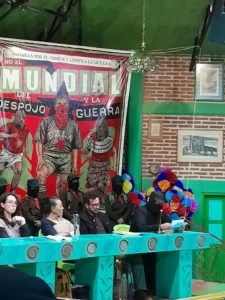
Zapatista Gathering, San Cristóbal de las Casas, August 2026 © SIPAZ
In recent decades, the EZLN has developed a strategy for building autonomy by creating its own forms of political, economic, and social organization in the indigenous communities of Chiapas. This strategy took shape in the formation of autonomous municipalities and, later, the Caracoles (autonomous regions) and the Councils of Good Government, through which they were able to make collective decisions on political, educational, and health matters, as well as the administration of their territories. They established autonomous schools, clinics, cooperatives, and productive projects organized from the community level. Autonomy is understood, in this sense, as a daily practice: it is not limited to demanding legal recognition of rights, but rather consists of exercising those rights and building concrete alternatives within the territory.
“Autonomy is understood as an everyday practice: it is not limited to demanding legal recognition of rights, but rather consists of exercising those rights and building concrete alternatives within the territory.”
Over time, the EZLN has modified its structures to strengthen community participation and prevent the concentration of power. In 2023, it announced a reorganization in which communities took on a more central role in decision-making.
Another central focus in recent years is summarized by the Zapatistas through the concept of “The Common,” which stems from the need to build a collective life based on cooperation, solidarity, and autonomy, rather than organizing society around private property, competition, and the concentration of power. “The Common” refers to that which belongs to and is built collectively: the territory, resources, knowledge, decisions, and forms of community organization. It is not merely an ideal but a daily practice based on collective participation, care for the territory, and bottom-up decision-making.
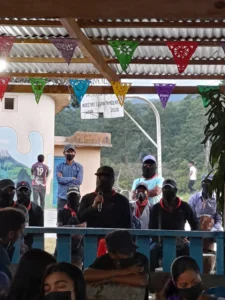
Zapatista Meeting, Morelia, April 2026 © SIPAZ
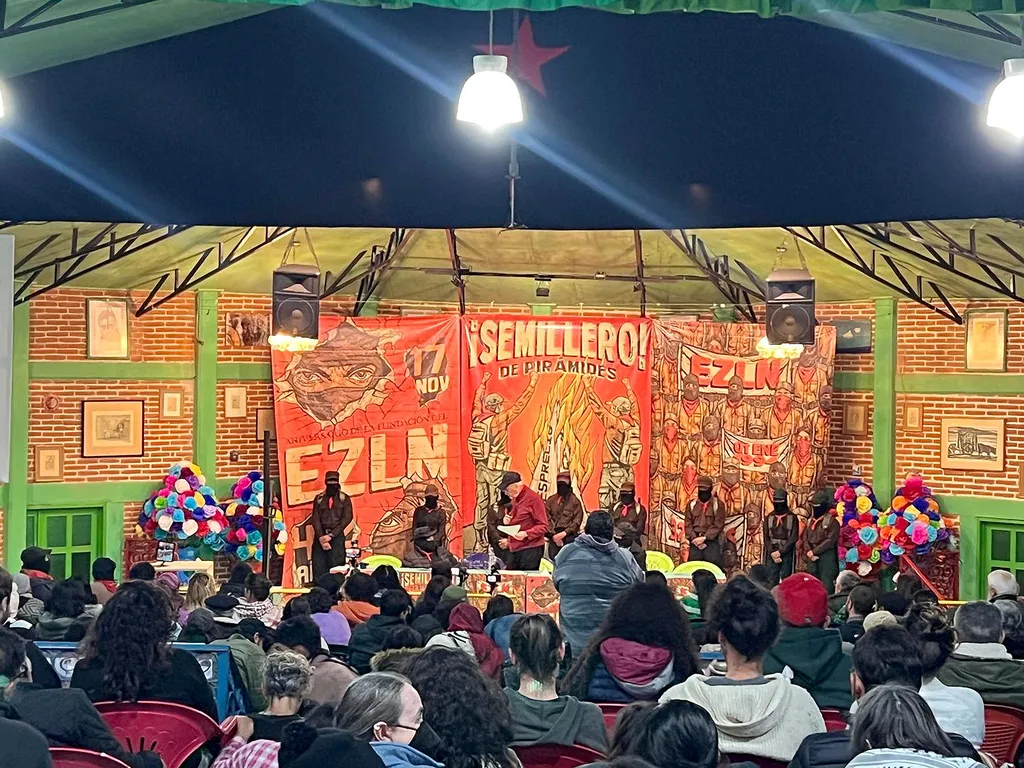
More broadly, the EZLN has developed a political proposal in response to a global crisis it identifies as a “storm” produced by capitalism: the answer must not be resignation, but rather grassroots organization, resistance, and the practical construction of alternatives. The starting point was the “Semillero” titled “Of Pyramids, Stories, Loves, and, of Course, Heartbreaks,” held in December 2025, which brought together members of the Sixth Commission and various thinkers to discuss the workings of power, the economy, the left, resistance movements, human rights, feminism, and the arts.
The EZLN has multiplied its calls for gatherings, “semilleros,” spaces for training, art, the exchange of experiences, and coordination among struggles. It argues that the global situation should not be confronted by waiting for solutions from governments, political parties, or institutions, but rather by building forms of autonomous organization. This idea was explicitly articulated by the Sixth Commission when it convened the “ResignARTE u OrganizARTE” conference in March 2026. The goal is to create permanent networks of individuals, collectives, communities, and organizations capable of resisting and building alternatives in their own territories.
During the summer of 2026, the EZLN expanded its analysis through the “War Against Humanity: Populations and Nature Under Siege” workshop. The program included topics such as militarization, counterinsurgency, criminal corporations, forced recruitment, extractivism, fracking, water grabbing, energy megaprojects, migration, labor, dispossession of Indigenous peoples, disappearances, and various forms of discrimination. In August 2026, simultaneous gatherings focused on art, resistance, and rebellion were also scheduled, featuring artistic performances and panel discussions on topics such as “The Arts Under Siege,” as well as gatherings at the Zapatista Caracoles. The underlying idea is that culture can help combat resignation and forge connections among different forms of resistance.
“Never Again a Mexico Without Us”: 30 Years of Struggle and Autonomy for the CNI
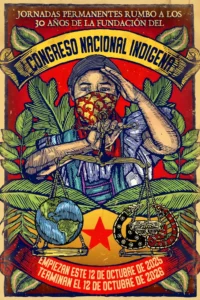
The National Indigenous Congress (CNI) was founded in 1996, amid the protests and the dialogue process between the EZLN and the Mexican government. In October of that year, representatives of indigenous peoples and organizations gathered in Mexico City and established the CNI. The gathering brought together a wide diversity of peoples and regions from across the country. Its founding declaration expressed one of its historic slogans: “Never again a Mexico without us.”
© CNI
From its inception, the CNI did not see itself as a political party or a centralized organization, but rather as a space for encounter, dialogue, solidarity, and organization among Indigenous peoples. The CNI defines itself as a kind of “house of the peoples,” where different communities, nations, tribes, neighborhoods, and collectives can share their experiences, problems, and forms of resistance. Its highest decision-making body is the assembly, where collective decisions are sought. This characteristic is important because the CNI strives to ensure that decisions and struggles emerge from the peoples themselves, respecting their traditional forms of organization and representation.
Furthermore, the CNI has placed the defense of land and territory at the center of its work. For the peoples that comprise it, territory is not merely an economic resource, but a space linked to identity, culture, language, community, and life. Over the years, this concern has been tied to opposition to projects that various peoples consider threats to their territories, including megaprojects, extractive activities, dispossession, and other forms of economic and political intervention.
Since 2001, the CNI has maintained a critical stance toward political parties and state institutions when it believes they are supplanting the voice of the peoples.
These principles encapsulate a different conception of political power. Rather than seeking to have a few leaders accumulate power, the aim is for those who represent the communities to abide by collective decisions and act in the service of the peoples.
“Rather than allowing a few leaders to accumulate power, the goal is for those who represent the communities to abide by collective decisions and act in the service of the people.”
The year 2026 marks 30 years of resistance and organization in the face of problems that continue to affect Indigenous peoples. For this reason, the CNI is organizing a series of events leading up to the anniversary that aim to strengthen the organization, draw on past experiences, and engage new generations in community processes. These 30 years serve both as a commemoration of what has been achieved since 1996 and as a call to continue organizing and defending the lives, autonomy, culture, and territories of these peoples.
Zapatista Meeting, San Cristóbal de las Casas, December 2026 © SIPAZ